UK Minimum Wage Rates 2026/27 by Age: What You Must Be Paid
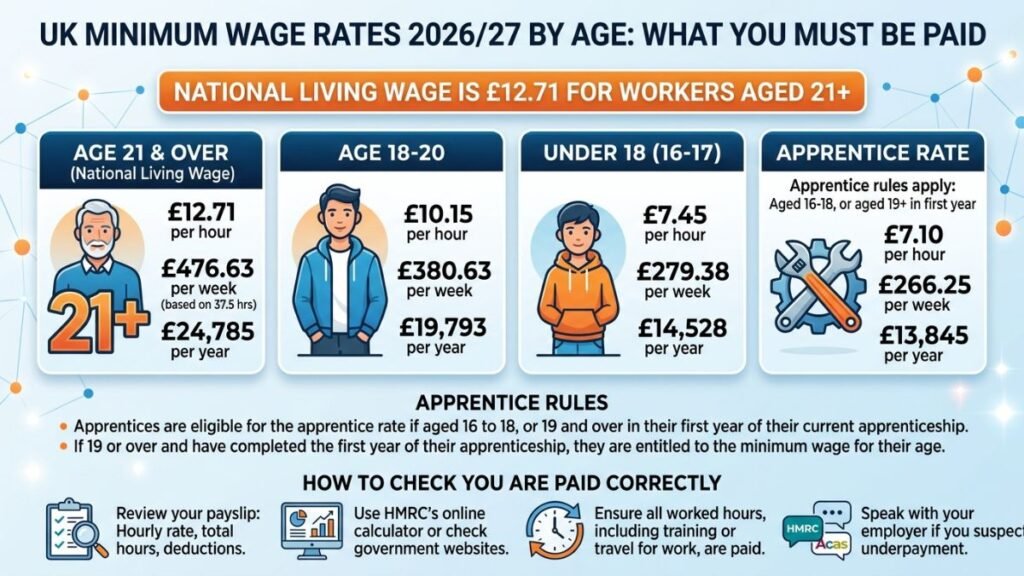
The legal minimum pay in the UK changed on 1 April 2026. If you are 21 or over, the National Living Wage is now £12.71 an hour. Younger workers and apprentices have their own lower rates. This guide sets out every rate that applies for 2026/27, what the figures mean in weekly and yearly pay, who counts as an apprentice, and what to do if you think you are being underpaid.
Rates are correct as of 19 October 2026 and apply from 1 April 2026 until the next April uprating. Always confirm on GOV.UK before relying on them.
UK minimum wage rates from 1 April 2026
| Who it applies to | Hourly rate | Previous rate (April 2025 to March 2026) | Increase |
|---|---|---|---|
| National Living Wage (aged 21 and over) | £12.71 | £12.21 | 50p (4.1%) |
| Aged 18 to 20 | £10.85 | £10.00 | 85p (8.5%) |
| Under 18 | £8.00 | £7.55 | 45p (6.0%) |
| Apprentice rate | £8.00 | £7.55 | 45p (6.0%) |
| Accommodation offset (per day) | £11.10 | £10.66 | 44p (4.1%) |
The rates are set by the government each year on the advice of the Low Pay Commission and normally change on 1 April.
National Living Wage vs National Minimum Wage
The two names cause a lot of confusion, but the idea is simple.
- The National Living Wage (NLW) is the legal minimum for workers aged 21 and over.
- The National Minimum Wage (NMW) is the legal minimum for workers under 21 and for apprentices.
The NLW age limit has come down in stages, from 25 to 23 in April 2021 and from 23 to 21 in April 2024. Anyone aged 21 or over now gets the top rate.
These are also different from the Real Living Wage, a voluntary rate set by the Living Wage Foundation. Employers choose to sign up to it, and it is usually higher than the legal minimum. It is not a legal requirement, so check livingwage.org.uk for the current figures.
What the rates mean in weekly, monthly and yearly pay
Hourly rates are easier to compare once you turn them into gross pay, which means before tax and National Insurance. These figures are for working the full year with no unpaid time off, and are rounded to the nearest penny.
| Rate | 37.5 hours a week | 40 hours a week |
|---|---|---|
| £12.71 (21 and over) | £476.63 a week, £2,065.38 a month, £24,784.50 a year | £508.40 a week, £2,203.07 a month, £26,436.80 a year |
| £10.85 (18 to 20) | £406.88 a week, £1,763.13 a month, £21,157.50 a year | £434.00 a week, £1,880.67 a month, £22,568.00 a year |
| £8.00 (under 18 and apprentice) | £300.00 a week, £1,300.00 a month, £15,600.00 a year | £320.00 a week, £1,386.67 a month, £16,640.00 a year |
For a full-time worker on 37.5 hours a week, the rise from £12.21 to £12.71 adds about £975 a year before tax.
Who gets the apprentice rate?
The apprentice rate of £8.00 applies to an apprentice who is either:
- under 19, or
- aged 19 or over and in the first year of their apprenticeship.
Once a 19 or over apprentice finishes the first year, they are entitled to at least the minimum wage for their age. GOV.UK gives a clear example: a 21-year-old in the first year of an apprenticeship must be paid at least £8.00 an hour, and after the first year at least £12.71.
Many employers pay apprentices more than the legal minimum, so check the advertised wage. Our complete guide to UK apprenticeships explains levels, pay and how to apply.
What happens when you move into a higher age band?
You are entitled to the higher rate once you reach the new age. In practice the change usually applies from the start of the first pay period after your birthday, so it is worth checking your payslip around your 18th, 21st and other age milestones. If your employer pays only the minimum, you should see the hourly rate rise.
Does the minimum wage apply to you?
The rules cover most workers, including part-time staff, agency workers, casual and zero-hours workers, and those on piece rates. The minimum wage rules do not work the same way for everyone, and some groups, such as the genuinely self-employed and volunteers, are outside them.
If you are on a salary, divide your annual pay by the hours you actually work to see your hourly rate. A salary that looks fine on paper can fall below the legal minimum if your real hours creep up. Our guide to zero-hours contracts covers the rights you keep on variable hours.
Common reasons pay falls below the minimum
Underpayment is rarely about the headline rate. It usually comes from the way working time is counted. Watch for:
- Unpaid working time, such as opening or closing duties, security checks, mandatory training or travel between jobs during the working day.
- Deductions for uniform, equipment or other costs that bring your pay below the minimum for the period.
- Salary sacrifice or other arrangements that reduce cash pay too far.
- Unpaid trial shifts that are really work rather than a short assessment.
- Accommodation charges above the offset allowed when your employer provides housing.
Students, part-timers and younger workers
Age, not job title, decides your rate. A 17-year-old on a Saturday job, a 19-year-old working part-time while studying and a 22-year-old in a first role all fall into different bands. Our guides to student jobs in the UK and part-time jobs and your rights explain how pay works alongside study.
How to check you are being paid correctly
- Find your hourly rate. Check your contract and payslip. If you are salaried, divide your yearly pay by your real working hours.
- Compare it with your age band in the table above.
- Count all working time, including anything unpaid that your employer requires.
- Look at deductions and whether they bring your pay under the minimum.
- Raise it with your employer first, in writing if possible, and keep your payslips.
- Get help if it is not fixed. Acas offers free advice, and you can report suspected underpayment to HMRC, which enforces the minimum wage.
Will the rates change again?
Yes. The rates are reviewed every year, and the next change is due in April 2027. The Low Pay Commission makes recommendations in the autumn and the government confirms the figures, so watch for an announcement in the coming weeks and months. We update this guide when the new rates are confirmed.
When comparing job offers, remember that regional living costs vary widely. Our regional salary guide explains how pay differs across the UK, and you can browse current UK jobs to see advertised pay.
Frequently asked questions
What is the minimum wage in the UK in 2026?
From 1 April 2026 it is £12.71 an hour for workers aged 21 and over, £10.85 for ages 18 to 20, and £8.00 for under 18s and apprentices.
Is the National Living Wage the same as the minimum wage?
They are related but not identical. The National Living Wage is the rate for people aged 21 and over, while the National Minimum Wage covers younger workers and apprentices.
When do the minimum wage rates change?
Usually on 1 April each year. The rates in this guide run from 1 April 2026 until the next uprating.
What is the minimum wage for a 16 or 17 year old?
The rate for workers under 18 is £8.00 an hour.
What is the apprentice minimum wage?
It is £8.00 an hour for apprentices under 19, and for apprentices aged 19 or over during the first year of their apprenticeship. After that year, the age-based rate applies.
How much is £12.71 an hour per year?
On 37.5 hours a week for a full year, it comes to £24,784.50 gross. On 40 hours a week it is £26,436.80 gross.
Is the Real Living Wage the legal minimum?
No. It is a voluntary rate that accredited employers choose to pay, and it is separate from the legal National Living Wage.
What should I do if I am paid less than the minimum wage?
Raise it with your employer in writing, keep your payslips, and contact Acas for free advice. You can also report the issue to HMRC.
Sources to check
Confirm current rates on the GOV.UK page for National Minimum Wage and National Living Wage rates and the Acas minimum wage guidance before acting on any figure in this article.