Hospitality Jobs in the UK: Bar, Waiting and Kitchen Roles (Pay and Tips Law)
Hospitality is one of the UK’s biggest employers of young people, students and first-time workers, and one of the easiest sectors to get into. Pubs, restaurants, hotels, cafes, event venues and holiday parks are always looking for bar staff, waiters, kitchen porters, chefs and housekeeping teams, often with no experience needed. Pay has risen with the minimum wage, and since 2024 there is a law that says employers must pass on tips to staff. This guide explains the main roles, what they pay in 2026, how the tips law works, and what to check before you accept a job.
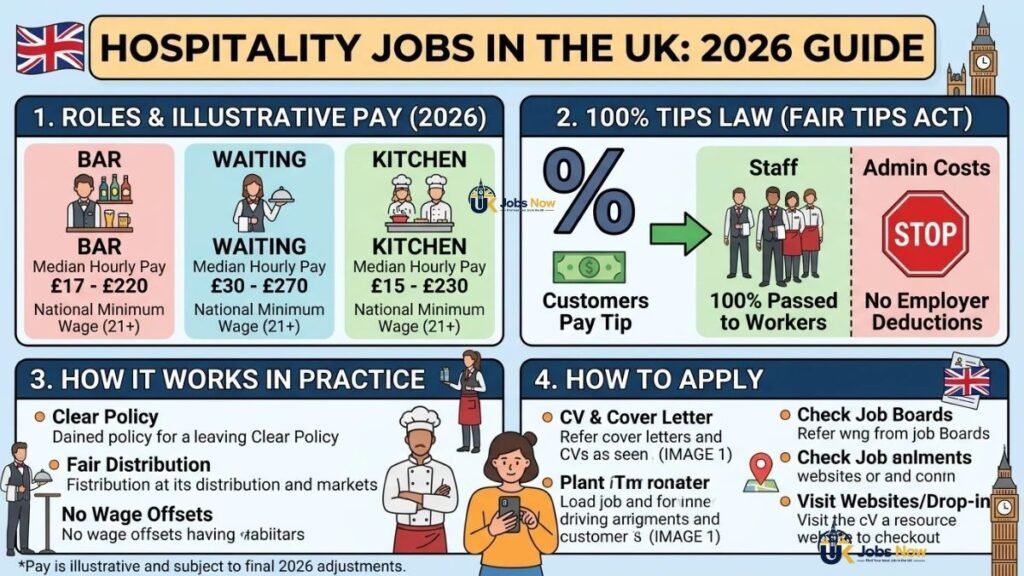
Quick answer: Entry-level hospitality jobs usually pay the legal minimum for your age or a little above (from £12.71 an hour for workers aged 21 and over). Experienced bar staff and kitchen porters are often advertised at about £12.50 to £16 an hour, and chefs are paid by skill level. Under the tips law in force since 1 October 2024, employers must pass on 100% of tips and service charges to workers, and tips cannot be used to make up your minimum wage.
Types of hospitality jobs
| Role | What it involves | Experience |
|---|---|---|
| Bar staff | Serving drinks, taking payments, keeping the bar clean and stocked | None usually needed |
| Waiter or waitress (server) | Taking orders, serving food and drink, looking after tables | None for casual venues, some for fine dining |
| Host or front-of-house assistant | Greeting and seating guests, managing bookings | Little or none |
| Barista | Making coffee and serving customers in cafes | None, training given |
| Kitchen porter (KP) | Washing up, cleaning the kitchen, basic prep, deliveries | None |
| Commis chef | Junior chef learning in a kitchen | None to some |
| Chef de partie | Runs one section of the kitchen | Experience needed |
| Sous chef and head chef | Manage the kitchen and team | Years of experience |
| Hotel housekeeping and room attendants | Cleaning rooms and public areas | None. See our guide to cleaning jobs in the UK |
| Hotel receptionist | Check-in, bookings and guest queries | Some customer service experience helps |
| Event and banqueting staff | Weddings, conferences and festivals | None, often casual |
| Fast food and quick-service crew | Cooking and serving in chains | None |
Browse current hospitality vacancies on our UK jobs board.
How much do hospitality jobs pay in 2026?
Pay depends on the venue, the role, your age and where you work. The figures below come from 2026 industry guides and recruiters. Many are estimates or adverts, so treat them as a guide and check each job advert.
Front of house and entry-level roles
- The legal minimum for workers aged 21 and over is £12.71 an hour from April 2026, £10.85 for ages 18 to 20 and £8.00 for under-18s and apprentices. See our National Minimum Wage 2026 guide.
- Entry-level bar, waiting and catering jobs are frequently advertised at or just above the minimum for your age.
- One recruiter’s 2026 report puts experienced bar staff and supervisors at about £13 to £16 an hour base pay, plus tronc or service charge, and kitchen porters at about £12.50 to £14.50 an hour.
- Agency and event waiting staff can earn more per hour at peak times, for example around £14 to £18 for experienced staff at busy weekends, but the hours are less secure.
- In London, employers often pay more. The voluntary London Living Wage, set by the Living Wage Foundation, was reported at £14.80 in a 2026 guide, though the figure is updated each autumn.
- A 2025/26 Living Wage Foundation figure cited in industry guides says more than half of UK hospitality jobs pay below the voluntary Real Living Wage rates, so pay varies widely.
Kitchen and chef roles (annual salaries, outside London)
| Role | Typical gross annual pay |
|---|---|
| Kitchen porter | About £26,500 (close to the minimum wage for full-time hours) |
| Chef de partie | About £28,000 to £32,000 |
| Sous chef | About £32,000 to £40,000 |
| Head chef (independent venue) | About £42,000 to £55,000 |
In London, salaries are usually higher. One 2026 benchmark puts a London chef de partie at £28,000 to £36,000 and a London head chef in a hotel or group at up to £75,000. Chef pay depends heavily on the venue, hours and whether the figure includes service charge, so check each advert. Indeed’s estimate for chefs overall is around £14.75 an hour.
Weekly example
For a 30-hour week at £12.71 an hour, you would earn about £381 before tax. At £14 an hour, you would earn about £420. Tips, tronc and service charge are on top, but they vary and should not be counted on.
The tips law: what you are entitled to
The Employment (Allocation of Tips) Act 2023 came into force on 1 October 2024. It applies across Great Britain, and its main rules are:
- Employers must pass on 100% of tips, gratuities and service charges to workers. That includes cash tips, card tips and discretionary service charges.
- Tips must be shared fairly. Employers need a written tipping policy that explains how tips are shared among staff, including front-of-house and, where applicable, kitchen and other team members.
- You can see the records. Workers have a right to ask for information about how tips have been handled and to get a written record.
- Employers cannot take tips for themselves. They cannot deduct amounts to cover breakages, till shortages, administration or anything similar. In practice, only limited deductions for the actual cost of processing card payments are allowed. Check the government’s code of practice for details.
- Tips cannot be used to top up the minimum wage. You are entitled to at least the minimum for your age as base pay, and tips come on top.
- Tips should be paid promptly, by the end of the month after they are received, in many cases.
Tronc and service charge
Some venues use a tronc, a separate fund into which tips and service charges are pooled and then shared according to a set policy. A tronc is usually run by a “troncmaster”, who is often chosen by staff. Tronc payments are normally taxed through payroll but generally do not attract National Insurance when run properly. Your payslip should show tips, service charge or tronc as a separate line from your basic pay. If it does not, ask your employer to explain.
If your employer is not following the law
- Ask for the written tipping policy and a record of how tips were shared.
- Raise the problem with your manager or HR in writing.
- Contact Acas for free advice.
- If the problem continues, you may be able to bring a claim to an employment tribunal. The time limit for most claims is six months for events on or after 1 October 2026, and you must go through Acas early conciliation first.
The Employment Rights Act 2025 also plans further changes to tipping law, which have been delayed. Check GOV.UK for the latest position, and read our guide to the Employment Rights Act 2025.
Contracts, hours and shift patterns
Hospitality work is flexible, but hours can be unpredictable.
- Zero-hours and casual contracts are common, especially in pubs, events and seasonal work. Read our guide to zero-hours contracts for your rights, including the reforms expected in 2027.
- Shifts often include evenings, weekends, bank holidays and late nights. Split shifts (for example, lunch and evening) are common in restaurants.
- Holiday pay. Casual and irregular-hours staff still build up paid holiday, often calculated as a percentage of hours worked (about 12.07% of hours for irregular hours work). Check your payslip shows it.
- Sick pay. Since April 2026, Statutory Sick Pay is payable from the first day for those who qualify.
- Breaks. Workers aged 18 and over are generally entitled to a 20-minute break on shifts longer than six hours, and rest between shifts.
- Late-night work. If you regularly work at night, extra rules on working time and health checks may apply.
- Staff meals and accommodation. Some venues offer meals, and live-in jobs may provide accommodation. Only a limited daily amount (the accommodation offset, £11.10 a day from April 2026) can be counted towards your minimum wage.
Before you accept, check the guaranteed hours, rota notice, pay rate, tip policy and notice period. Our guides to understanding your employment contract and notice periods in the UK explain what to look for.
Requirements for hospitality jobs
For most entry-level roles, employers want:
- The right to work in the UK. See our guide to right to work checks in the UK.
- A friendly, reliable attitude and good communication.
- Flexibility with evenings, weekends and holidays.
- Stamina, because most roles involve long periods on your feet.
- A neat appearance and basic hygiene standards.
- Basic maths for handling cash and card payments.
You do not usually need qualifications, and employers train new staff. Useful extras include a Level 2 Food Safety and Hygiene certificate (often arranged and paid for by the employer), allergen awareness training and, for bar work, knowledge of Challenge 25 and age-checking rules.
Age rules
- Many hospitality employers hire from 16, though some roles and venues set higher minimum ages, especially for bar work and late shifts. Check each advert.
- Under-18s can usually serve alcohol in some settings (such as with a meal) with the approval of a responsible person, but the rules vary by country in the UK and by type of venue. Check the rules with the employer and on GOV.UK.
- Young workers have limits on their working hours and night work, so check the rules if you are under 18.
Do you need a licence to work behind a bar?
Bar staff do not usually need their own personal licence. The pub or venue must hold a premises licence and a designated premises supervisor. Managers often hold a personal licence, which is a separate qualification.
How to apply: step by step
- Choose the type of venue and role that suits you, for example a busy pub, a restaurant, a hotel or a cafe.
- Prepare a simple CV. Include any customer service, volunteering or caring experience. See our guide to writing a UK CV with no experience and our cover letter guide.
- Apply in person as well as online. Many independent venues still hire by walking in with a CV, especially for bar and waiting jobs. Go at a quiet time, not during a rush.
- Look at the big chains’ careers pages, as well as hotel groups, pub groups and contract caterers, and our jobs board.
- Prepare for a trial shift or short interview. Some venues ask for a paid trial shift. If you do real work, you should be paid.
- Check your right-to-work documents, and have your ID and bank details ready.
- Ask about training, tips and rotas before you accept.
Interview tips
Hospitality interviews are usually short and informal. Employers want to see that you are friendly, reliable and can cope when it is busy. Prepare for questions such as:
- Why do you want to work here?
- Tell me about a time you helped someone or dealt with a difficult customer.
- How do you cope when it is busy and under pressure?
- Are you comfortable working evenings, weekends and bank holidays?
- How would you handle someone who has had too much to drink?
Use real examples and the STAR method (Situation, Task, Action, Result). Our customer assistant interview guide explains how.
Seasonal and Christmas hospitality jobs
December is the busiest time of year for many venues, with Christmas parties, festive menus and extra bookings. Restaurants, hotels, pubs, Christmas markets and events companies hire temporary staff from October. Holiday parks, resorts and seaside venues recruit in spring for the summer season. See our guide to Christmas jobs in the UK 2026 for employers hiring now.
Career progression
Hospitality offers fast progression for people who work hard and stay reliable:
- Bar staff to bar supervisor to bar manager to pub or restaurant manager
- Waiter to head waiter, restaurant supervisor or events manager
- Kitchen porter to commis chef, chef de partie, sous chef and head chef
- Receptionist or housekeeper to duty manager or hotel manager
- Apprenticeships in professional cookery, hospitality supervision and management, which let you earn while you learn
- Moving into events, catering, food development or running your own business
Problems to watch for
Hospitality has a reputation for long hours and uneven standards. Be alert for:
- Unpaid trial shifts or training. If you do real work, you should be paid at least the minimum wage.
- Tips not shared properly, or deductions from tips or wages for breakages and till shortages.
- Pay below the minimum, especially when unpaid time or deductions are counted.
- Cash-in-hand work with no payslip, which leaves you without holiday pay, sick pay or a record of earnings.
- Unpredictable rotas, with late cancellations. Under the planned 2027 reforms, qualifying workers will get more protection.
- Harassment, including from customers. Employers have a duty to protect staff, and the rules are getting stronger from 30 October 2026. See our guide to the Employment Rights Act 2025.
If something is wrong, keep records of your hours and pay, and contact Acas.
Beware of scams
Be careful of adverts that ask for fees for a uniform, a food hygiene certificate or a “guaranteed” job, or that offer hospitality jobs abroad or visa sponsorship for payment. Entry-level hospitality roles do not usually qualify for visa sponsorship. See our guides to jobs with visa sponsorship in the UK and how to spot a fake job advert in the UK.
Frequently asked questions
How much do bar staff get paid in the UK? Entry-level bar staff are usually paid at or just above the minimum wage for their age, from £12.71 an hour for those aged 21 and over. Experienced bar staff are often advertised at about £13 to £16 an hour, plus tips or tronc.
Do I get to keep my tips? Yes. Under the Employment (Allocation of Tips) Act 2023, employers must pass on 100% of tips and service charges to workers, and share them fairly under a written policy.
Can my employer use tips to make up my minimum wage? No. Tips cannot count towards your minimum wage pay.
Do I need experience to work in hospitality? Not for most entry-level roles. Employers train new staff, and reliability and attitude matter most.
How old do you have to be to work in a pub or restaurant? It varies. Many venues hire from 16, but rules on serving alcohol and working late differ, so check each advert and the rules for your country.
Do kitchen porters get paid more than the minimum wage? Often only a little more. Several 2026 guides put kitchen porter pay at about £12.50 to £14.50 an hour, or around £26,500 a year full time outside London.
Do I need a food hygiene certificate to work in a kitchen? Many employers require a Level 2 certificate and often arrange it for you. Check the advert.
Are hospitality jobs zero hours? Many are, especially casual and event work. Ask about guaranteed hours before you accept.
Final thoughts
Hospitality is a fast way into work, with flexible hours, training and clear routes to progress. Check your hourly rate and contract, ask how tips are shared, and keep records of your hours. When you are ready, browse the latest vacancies on our jobs board and apply directly with the venue.
This article is general information, not legal advice. Pay data comes from industry guides and adverts and changes often. Check GOV.UK, the government’s tipping code of practice and Acas for the latest rules, and the job advert for the details of each role.