National Minimum Wage 2026: Rates by Age
How much you must legally be paid in the UK depends on your age and, for some people, whether you are an apprentice. The rates went up on 1 April 2026, and the biggest percentage rise went to younger workers. This guide sets out every current rate, what it means in weekly and yearly pay, who is covered, and what to do if you are being paid too little.
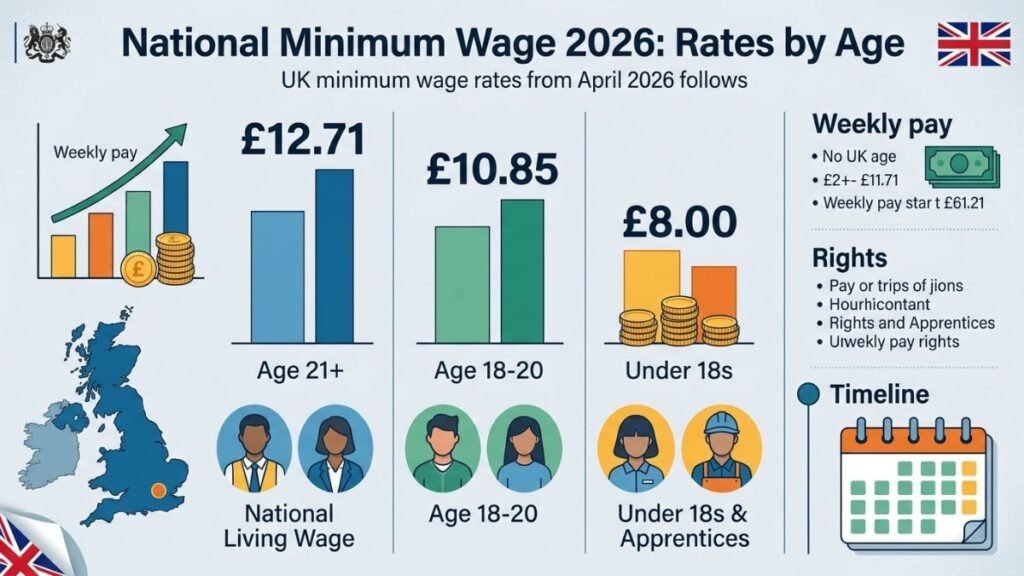
Quick answer: From 1 April 2026 the National Living Wage for workers aged 21 and over is £12.71 per hour. The rate is £10.85 for ages 18 to 20, and £8.00 for under-18s and apprentices.
UK minimum wage rates from 1 April 2026
| Who it applies to | Hourly rate from April 2026 | Previous rate (April 2025) | Increase |
|---|---|---|---|
| National Living Wage (21 and over) | £12.71 | £12.21 | 50p (4.1%) |
| 18 to 20 year olds | £10.85 | £10.00 | 85p (8.5%) |
| 16 to 17 year olds | £8.00 | £7.55 | 45p (6.0%) |
| Apprentices | £8.00 | £7.55 | 45p (6.0%) |
| Accommodation offset (per day) | £11.10 | £10.66 | 44p (4.1%) |
These are the statutory minimums. Your employer can always pay more, and many do. Rates are set each year on the advice of the Low Pay Commission and apply across the whole UK.
What the rates mean in weekly and yearly pay
Here is a rough guide to what the minimum works out at before tax and National Insurance. Figures assume you work every week of the year with no unpaid time off.
| Hours per week | Aged 21+ (£12.71) | Aged 18 to 20 (£10.85) | Under 18 or apprentice (£8.00) |
|---|---|---|---|
| 16 hours | £203.36 a week / about £10,575 a year | £173.60 / about £9,027 | £128.00 / about £6,656 |
| 30 hours | £381.30 / about £19,828 | £325.50 / about £16,926 | £240.00 / £12,480 |
| 37.5 hours | £476.63 / about £24,785 | £406.88 / about £21,158 | £300.00 / £15,600 |
| 40 hours | £508.40 / about £26,437 | £434.00 / about £22,568 | £320.00 / £16,640 |
Your take-home pay will be lower after Income Tax, National Insurance and any pension contributions. Whether you pay tax at all depends on your total income and tax code.
Who gets the National Living Wage and who gets the National Minimum Wage?
The system has two names, and people often mix them up:
- National Living Wage (NLW): the higher rate for workers aged 21 and over.
- National Minimum Wage (NMW): the lower age-based rates for workers under 21, plus the apprentice rate.
The National Living Wage used to start at age 23. It now starts at 21, and the government is working towards removing the lower rate for 18 to 20 year olds altogether, which is why that rate rose fastest this year.
Turning 21 (or 18)
When you have a birthday that moves you into a higher age band, you become entitled to the higher rate. In practice this usually applies from the start of your next pay period after the birthday, so check your payslip after your birthday and ask your employer if it hasn’t changed.
How the apprentice rate works
Apprentices are entitled to the apprentice rate of £8.00 per hour if they are either:
- under 19, or
- aged 19 or over and in the first year of their apprenticeship.
Once you are 19 or over and have completed your first year, you are entitled to the minimum wage for your age. A 20-year-old in the second year of an apprenticeship, for example, should be paid at least £10.85 an hour, and a 22-year-old at least £12.71.
The apprentice rate applies to time spent working and to time spent on training that is part of the apprenticeship.
Who is covered by the minimum wage?
In general, the minimum wage applies to almost everyone who counts as a worker and is above school leaving age. That includes:
- Full-time, part-time and casual workers
- Agency workers
- Workers on zero-hours contracts
- Pieceworkers and many homeworkers
- Many interns and trainees who are doing real work
It does not generally cover people who are genuinely self-employed, volunteers for charities, or people below school leaving age. Rules on work experience placements, internships and unpaid trial shifts are more complicated. If you are doing real work, you are usually entitled to be paid for it, so check with Acas before agreeing to unpaid work.
What counts towards your minimum wage pay?
Your employer can only count certain things toward the minimum wage. Tips are not allowed to make up the difference, and an employer cannot take deductions that push your pay below the legal minimum, apart from a small number of permitted cases. Common problems to watch for include:
- Unpaid time: time you are required to be at work, such as waiting, travelling between jobs, or pre-shift briefings, may count as working time.
- Uniform and equipment costs: deductions for these can push your pay below the minimum.
- Accommodation: if your employer provides housing, only a limited amount per day (the accommodation offset of £11.10 from April 2026) can be counted towards your pay.
- Unpaid overtime: your average hourly pay over the pay period must still meet the minimum.
What to do if you are paid less than the minimum wage
Underpayment is more common than it should be. If you think you are being underpaid:
- Check your payslips. Work out your hourly rate by dividing what you were paid by the hours you actually worked.
- Keep records. Save payslips, contracts, rotas, messages and any record of your hours.
- Raise it with your employer. A calm written request often resolves a simple mistake.
- Contact Acas. Acas offers free, impartial advice on pay problems. Its helpline number is on the Acas website.
- Report it to HMRC. HMRC enforces the minimum wage and can investigate employers who underpay. You can complain through GOV.UK, and you can do so anonymously in many cases.
It is unlawful for an employer to punish you for asking about or complaining about minimum wage pay.
What about the Real Living Wage?
The Real Living Wage is a separate, voluntary rate set by the Living Wage Foundation. It is based on the cost of living, not on law, and is usually higher than the statutory National Living Wage. Employers choose whether to pay it. If an employer is accredited, it is a good sign. You can search the Living Wage Foundation’s list of accredited employers to see who has signed up.
What happens in April 2027?
The Low Pay Commission has indicated that the National Living Wage will need to rise to more than £13 an hour in April 2027 to stay in line with its target of two-thirds of median hourly earnings. It is also expected to keep narrowing the gap for 18 to 20 year olds. The final 2027 rates are confirmed by the government, usually after the Low Pay Commission reports in the autumn, so treat any figure you see before then as an estimate.
Finding jobs that pay above the minimum
The minimum wage is a floor, not a target. Many roles on our job board pay more, and the advertised rate is a useful way to compare employers. When you browse, look at the pay, hours, pension and sick pay together rather than the hourly rate alone. Since April 2026, Statutory Sick Pay is payable from the first day of sickness, which is worth knowing when you compare offers. For more on what is changing in employment law, read our guide to the Employment Rights Act 2025.
You can browse the latest UK job vacancies and filter by category, region and salary.
Frequently asked questions
What is the minimum wage in the UK in 2026? From 1 April 2026 it is £12.71 an hour for workers aged 21 and over, £10.85 for ages 18 to 20, and £8.00 for under-18s and apprentices.
Is the National Living Wage the same as the minimum wage? They are closely related but not identical. The National Living Wage is the higher rate for workers aged 21 and over. The National Minimum Wage covers the lower age-based and apprentice rates.
How much is £12.71 an hour per year? For a 37.5-hour week, it comes to about £24,785 a year before tax. For a 40-hour week it is about £26,437.
Do part-time workers get the minimum wage? Yes. The minimum wage applies per hour, so part-time workers must be paid at least the rate for their age.
Do apprentices get the minimum wage? Apprentices have their own rate of £8.00 an hour if they are under 19 or in the first year of their apprenticeship. After that, they are entitled to the rate for their age.
When will the minimum wage go up again? Rates normally change each April. The Low Pay Commission expects the National Living Wage to exceed £13 in April 2027, subject to final government confirmation.
Final thoughts
Knowing the rate for your age is the quickest way to check that you are being paid fairly. If your hourly pay, once you divide it out properly, is below the figure for your age band, you are entitled to ask for it to be corrected and to back pay.
This article is general information, not legal or financial advice. Rates and rules can change. Check GOV.UK for the latest minimum wage rates and contact Acas for advice on your own situation.