Understanding Your Employment Contract: Key Terms Explained
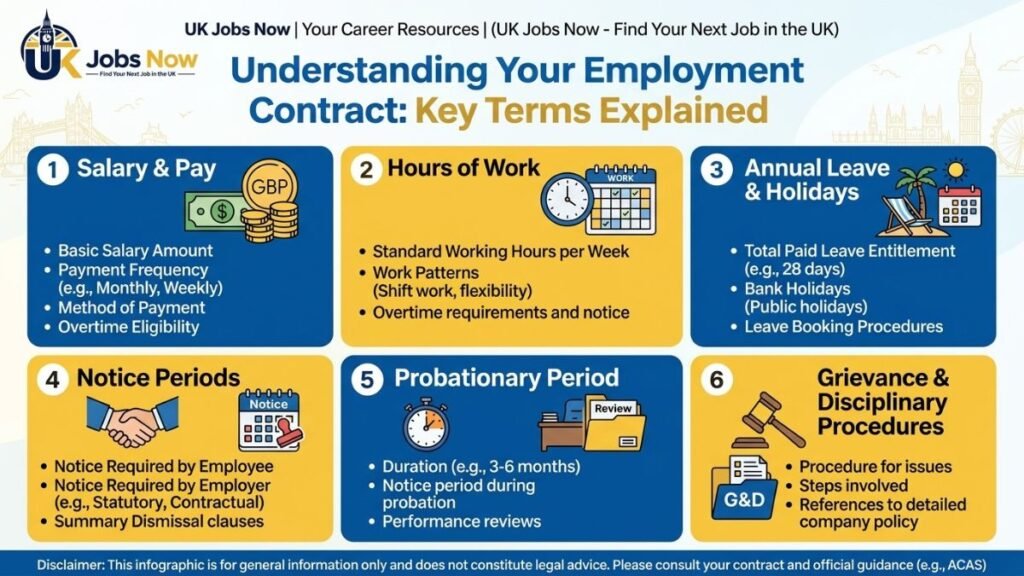
Most people sign their employment contract with a quick skim rather than a genuine read-through, largely because the language feels dense and the excitement of a new job understandably takes priority. That’s a genuinely risky habit, since a contract sets the actual, binding terms of your employment — not the friendlier summary given verbally at interview — and a handful of specific clauses are worth understanding properly before you sign anything. This is a practical, plain-language guide to what a UK employment contract actually contains and what to check carefully.
What your employer is legally required to provide
UK law requires employers to provide a written statement of core employment terms, generally on or before your first day of employment, covering key details including your job title and description, start date, pay and how it’s calculated, working hours, holiday entitlement, and notice periods, among other core terms. This can take the form of a full written contract or a simpler “written statement of particulars,” but either way, you’re legally entitled to written confirmation of these core terms — if you haven’t received this, it’s reasonable to request it directly from your employer.
Permanent versus fixed-term versus casual contracts
It’s worth understanding the key differences between the main contract types you’re likely to encounter. A permanent contract has no predetermined end date and continues until either party ends it through resignation, dismissal, or redundancy. A fixed-term contract has a specific, predetermined end date or is tied to a specific project’s completion, and fixed-term employees retain most of the same core rights as permanent employees, covered in more depth in our guide to temporary and contract work. A zero-hours contract, covered separately in our dedicated guide, doesn’t guarantee any minimum hours at all. Understanding which category your specific offer falls into shapes what rights and expectations genuinely apply.
Key clauses genuinely worth reading carefully
Probation period terms
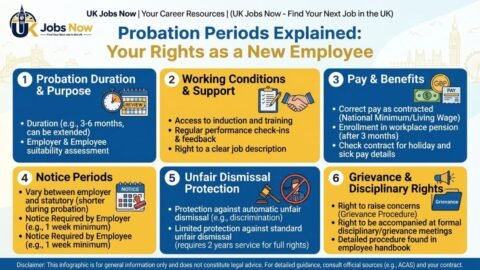
As covered in more depth in our guide to probation periods, check the specific length of any probationary period and whether a different, typically shorter, notice period applies during it, since this can differ meaningfully from your standard post-probation notice terms.
Notice period
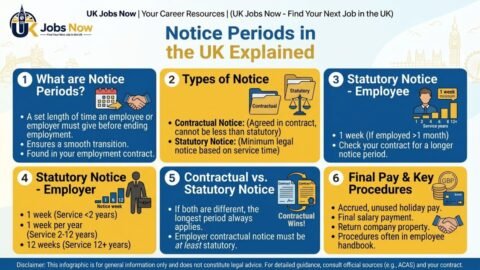
Covered in full in our guide to UK notice periods, check both what notice you’d need to give if resigning and what notice your employer would give if ending your employment, since these figures directly affect your practical flexibility to move roles in future.
Restrictive covenants
Some contracts, particularly at a more senior level or in competitive industries, include restrictive covenants — clauses limiting your ability to work for a competitor or solicit former clients or colleagues for a period after leaving. These clauses are only enforceable if they’re reasonable in scope, duration, and geographic reach, and an overly broad or lengthy restriction may not hold up if genuinely challenged, but it’s worth understanding what a specific contract actually states before you sign it, since disputing an unreasonable clause after the fact is considerably more difficult and stressful than negotiating it before signing.
Working hours and overtime
Check whether your contracted hours include any expectation of unpaid overtime, and if overtime is paid, at what rate — this varies considerably between employers and roles, and it’s a genuinely practical detail that affects your actual working life more than many other contract clauses.
Benefits and pension
Confirm the specific details of any benefits mentioned during the hiring process — pension contribution rates, private healthcare, or other perks — are actually reflected accurately in the written contract, since verbal promises during an interview don’t always make it into the final written terms unless someone specifically ensures they do.
A practical checklist before signing
| Check | Why it matters |
|---|---|
| Job title and description match what was discussed | Prevents ambiguity about your actual role and responsibilities later |
| Salary and pay date/method are correctly stated | Basic but genuinely important to verify precisely |
| Notice period and probation terms are clear | Directly affects your future flexibility to change roles |
| Any restrictive covenants are reasonable | Overly broad restrictions can genuinely limit future career moves |
| Benefits discussed verbally are reflected in writing | Only written terms are reliably enforceable |
What to do if something in the contract doesn’t match what was discussed
If you notice a genuine discrepancy between what was verbally discussed during the hiring process and what’s actually written in the contract, it’s worth raising this directly and promptly with your employer before signing, rather than assuming it’s a minor oversight or, alternatively, silently accepting a term you’re not genuinely comfortable with. Most employers are willing to clarify or correct a genuine discrepancy raised professionally and promptly — this conversation is considerably easier before you’ve signed than after.
Can you negotiate contract terms before signing?
Yes, genuinely — while some core terms (particularly for roles with standardised, less flexible company-wide policies) may have limited room for negotiation, aspects like start date, specific benefits, or even certain restrictive covenant terms are sometimes more negotiable than candidates assume, particularly for more senior or specialist roles where an employer has genuine reason to want to secure you specifically. It’s worth raising any genuine concern or request directly and professionally rather than assuming a contract is entirely non-negotiable simply because it’s presented as a standard document.
Keeping a copy and understanding your ongoing rights
Once signed, keep a copy of your contract accessible for future reference — you’ll likely want to check specific terms again at various points during your employment, whether around a pay rise, changing role internally, or eventually resigning. If your employer wants to make a significant change to your contract terms during your employment, this generally requires your genuine agreement, and unilateral changes to core terms without consultation or agreement can, in some circumstances, be legally challengeable.
Offer letters versus employment contracts
It’s worth understanding the distinction between an initial offer letter and the full employment contract that typically follows it — an offer letter often confirms the headline terms (role, salary, start date) as an initial expression of the offer, while the full contract sets out the complete, detailed terms and is generally the document that’s genuinely binding once signed. If there’s any inconsistency between an earlier offer letter and the subsequent full contract, it’s worth raising this directly, since the full contract is typically the document that governs your actual employment relationship going forward.
What happens if you never receive a written contract at all
If you’ve started work without ever receiving the written statement of core terms you’re legally entitled to, this doesn’t mean you have no employment rights — your statutory rights still apply regardless of whether your employer has correctly documented them in writing. However, it does leave you in a genuinely weaker position if a dispute arises about a specific term, since there’s no written record to point to. It’s worth requesting this documentation directly and in writing if you haven’t received it, since you’re entitled to it and having it protects both you and, ultimately, your employer from later disputes about what was actually agreed.
Getting started
If you have a contract offer in front of you now, it’s worth taking the time to read it properly against the checklist above before signing, rather than treating it as a formality. If you’re still job searching, you can browse current active UK job listings across sectors and job types.
Frequently Asked Questions
Am I legally entitled to a written employment contract?
You’re entitled to a written statement of core employment terms, generally provided on or before your first day, covering details like job title, pay, hours, holiday entitlement, and notice periods — this can be a full contract or a simpler written statement of particulars.
Can my employer change my contract terms without my agreement?
Generally no, not for significant changes to core terms — this typically requires your genuine agreement, and unilateral changes without consultation can, in some circumstances, be legally challengeable.
Are restrictive covenants in employment contracts always enforceable?
No — they’re only enforceable if reasonable in scope, duration, and geographic reach. An overly broad or lengthy restriction may not hold up if genuinely challenged, though it’s still worth understanding and, where possible, negotiating any such clause before signing.
Can I negotiate my employment contract before signing it?
Often yes, at least to some degree — aspects like start date, specific benefits, or certain other terms are sometimes more negotiable than candidates assume, particularly for more senior or specialist roles.
What should I do if my contract doesn’t match what was discussed at interview?
Raise the discrepancy directly and promptly with your employer before signing — most are willing to clarify or correct a genuine mismatch raised professionally, and this is considerably easier to resolve before you’ve signed than afterward.