
Working in Birmingham: The West Midlands Job Market Explained
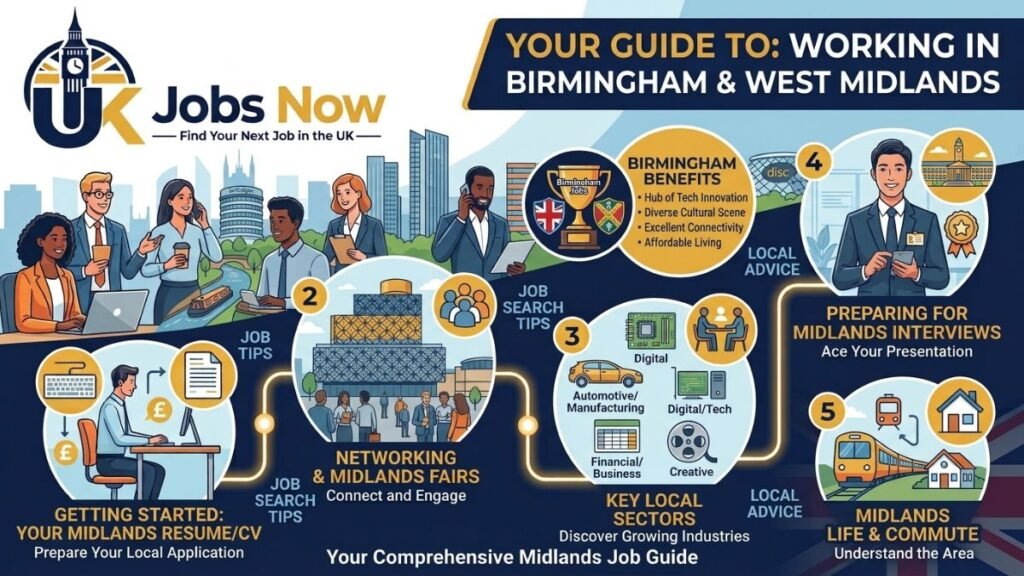
Birmingham has spent much of the last decade deliberately repositioning itself — significant investment in the city centre, a growing financial and professional services sector, and infrastructure projects aimed at strengthening its connectivity to the rest of the country have shifted the city’s job market meaningfully from its traditional manufacturing-heavy reputation toward something considerably broader. This is a practical guide to what the West Midlands’ largest city actually offers job seekers right now, sector by sector.
Birmingham’s evolving sector strengths
Birmingham has built a genuinely significant financial and professional services presence over recent years, with several major banks and financial institutions establishing substantial operations in the city, partly driven by a deliberate strategy of decentralising roles away from London. Alongside this newer strength, the city retains meaningful presence in its more traditional areas — advanced manufacturing and engineering, particularly connected to the automotive sector, and a large, established professional services base spanning law, accountancy, and consulting. More recently, the city has also built a growing technology and digital sector, smaller in scale than Manchester’s but genuinely present and expanding, particularly around fintech applications connected to the city’s financial services growth.
How Birmingham pay compares
As covered in more depth in our guide to UK regional salaries, Birmingham and the wider West Midlands generally sit below London pay for comparable roles, but the gap has narrowed somewhat for professional and financial services roles specifically, reflecting the city’s genuine investment in these sectors. Combined with a considerably lower cost of living than London, particularly housing, the realistic disposable income comparison for many professional roles is often more favourable in Birmingham than the headline salary gap alone would suggest.
Connectivity as a genuine strength
Birmingham’s central UK location and strong transport links — including its position as a major national rail hub — make it a genuinely practical base for roles involving regular travel across the country, and the city’s connectivity is a real, specific advantage worth considering if your work involves this kind of national reach. This connectivity has also been a specific factor in attracting companies choosing Birmingham as a base precisely because of its central accessibility to the rest of the UK, and it’s part of why several large organisations have relocated national or regional headquarters functions to the city over recent years.
The automotive and advanced manufacturing sector
The wider Birmingham and West Midlands area retains a genuinely significant automotive and advanced manufacturing presence, including substantial engineering employment connected to this sector — relevant not just for traditional manufacturing roles but for the engineering, design, and increasingly software and technology roles connected to modern automotive development, including the ongoing shift toward electric and connected vehicle technology. If your background is in engineering specifically, this regional strength is worth researching directly, since it represents a genuinely distinct concentration compared to many other UK regions.
Birmingham’s growing financial and professional services corridor
The specific area around Birmingham’s Colmore Row and the wider central business district has developed a genuine concentration of financial and professional services activity, sometimes discussed as a secondary UK financial centre outside London and Edinburgh, though at a considerably smaller scale than either. If you’re specifically targeting banking, financial services, or professional services roles, researching which specific firms have established a genuine Birmingham presence — rather than assuming uniform opportunity across the whole sector — will sharpen your search considerably.
Public sector and healthcare employment
As with most major UK cities, Birmingham hosts substantial public sector and healthcare employment, including large NHS trusts serving the city and wider region, alongside significant local government and public body employment. If non-clinical healthcare roles or public sector work more broadly interest you, Birmingham’s scale as a major city means these sectors offer genuine, substantial opportunity alongside its more discussed private sector growth.
Birmingham’s networking and professional community
Birmingham has developed a genuinely active professional networking scene, particularly connected to its growing financial and professional services sector, with regular industry events and meetups supported by the city’s business community and organisations specifically focused on promoting Birmingham’s economic growth. If networking is part of your search strategy, our guide to using LinkedIn effectively and guide to networking for introverts both remain directly relevant, and it’s worth researching Birmingham-specific industry events within your target sector, since the city’s networking community has grown considerably alongside its economic repositioning.
Graduate opportunities in Birmingham
Birmingham is home to several major universities, supporting a genuinely strong local graduate labour market, and the city’s growing financial services and professional services sectors have specifically increased graduate scheme availability in recent years, as major employers establishing a Birmingham presence build out structured entry-level recruitment alongside their expanding operations. If you’re a recent or upcoming graduate, it’s worth researching whether employers you’re interested in run Birmingham-specific graduate intake, particularly within financial services, where this growth has been most pronounced.
Comparing Birmingham to other major UK regional cities
If you’re weighing Birmingham against other major regional cities like Manchester or Leeds, it’s worth understanding the genuine differences in sector emphasis rather than assuming interchangeable opportunity — Birmingham’s growth has been particularly concentrated in financial and professional services and retains a stronger manufacturing and engineering base than Manchester’s more technology-and-media-led growth, covered in our guide to Manchester’s job market. Neither city is uniformly “better” — the right choice depends on which specific sector genuinely aligns with your background and career goals, and it’s worth researching both directly if you’re open to relocating to either.
Living costs and commuting around Birmingham
Similar to other major UK cities, cost of living within the wider Birmingham area varies meaningfully depending on specific location — central Birmingham and some of the more established surrounding areas carry a premium compared to other parts of the wider West Midlands conurbation, which remain more affordable while still offering reasonable transport connectivity into the city centre via Birmingham’s local rail and bus network. Researching specific areas rather than assuming a single uniform cost figure will give you a more accurate picture when comparing a specific job offer against realistic living costs.
What ongoing regeneration means for the job market
Birmingham has been subject to sustained regeneration investment over recent years, including significant city centre development and infrastructure improvements, which has translated into genuine, ongoing job creation across construction, professional services, and the broader economic activity that follows major urban investment. This is worth understanding as a reasonably durable trend rather than a short-term spike, since continued investment in the city’s infrastructure and business districts suggests the current growth in professional and financial services roles is likely to continue developing over the coming years rather than representing a narrow, temporary moment in the city’s economic story.
A practical summary
| Factor | What to know |
|---|---|
| Sector strengths | Financial and professional services (growing), advanced manufacturing and automotive engineering, established professional services (law, accountancy), a smaller but genuine tech sector |
| Pay versus London | Generally lower, though the gap has narrowed for financial and professional services specifically |
| Connectivity | Genuinely strong central UK transport links, a real advantage for roles involving national travel |
| Cost of living | Considerably lower than London, supporting a favourable realistic disposable income comparison |
Getting started
You can browse current active UK job listings filtered to the West Midlands region to see current openings across Birmingham’s growing financial services sector, its established manufacturing and engineering base, and broader professional roles.
Frequently Asked Questions
Is Birmingham a good alternative to London for financial services roles?
Increasingly, yes — Birmingham has attracted significant investment from major banks and financial institutions in recent years, partly reflecting a deliberate move to decentralise roles away from London, alongside considerably lower cost of living.
What industries is Birmingham traditionally known for?
Advanced manufacturing and automotive engineering have long been core strengths of the wider West Midlands economy, and this presence remains genuinely significant alongside the city’s newer growth in financial and professional services.
How does Birmingham’s cost of living compare to London?
Considerably lower, particularly housing, which meaningfully affects the realistic comparison between a Birmingham salary and a London one beyond the headline figures alone.
Is Birmingham well connected to the rest of the UK for work involving travel?
Yes, genuinely — its central location and status as a major national rail hub make it a practical base for roles requiring regular travel across the country.
Does Birmingham have a genuine technology sector, or is it purely finance and manufacturing?
It has a smaller but genuine and growing technology sector, particularly around fintech applications connected to the city’s financial services growth, though it’s considerably smaller in scale than Manchester’s more established tech presence.