Job Search Guide: Liverpool and the North West
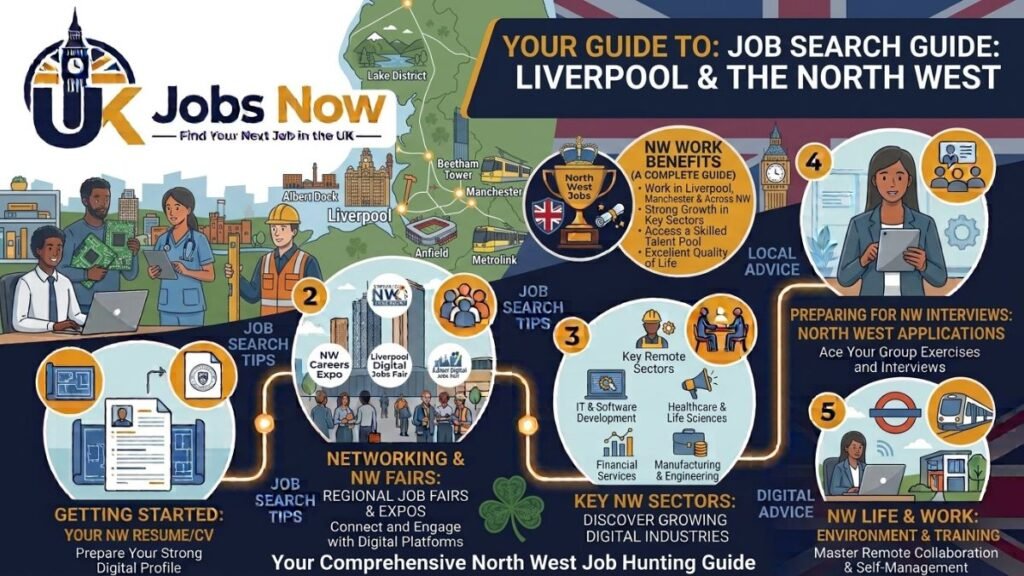
Liverpool’s job market has undergone a genuinely significant transformation over the past two decades, moving well beyond its historical docks and manufacturing identity into a city with real strength in creative and digital industries, life sciences, and a growing visitor economy, while retaining a substantial logistics and maritime sector connected to its continued status as a major UK port. This is a practical guide to what Liverpool actually offers job seekers right now, distinct from the wider North West region it sits within alongside Manchester.
Liverpool’s creative and digital industries
Liverpool has built a genuinely distinctive creative industries reputation, partly connected to the city’s cultural profile and significant investment following its year as European Capital of Culture, supporting a real cluster of design, digital media, and creative agency employment. This sits alongside a growing digital technology sector, smaller in scale than Manchester’s more established tech presence but genuinely active, particularly in areas connected to the city’s universities and a deliberate local strategy of supporting digital business growth. If creative, design, or digital media work interests you and Manchester’s larger, more competitive scene feels daunting, Liverpool is worth researching directly as a genuinely credible, somewhat less saturated alternative within the wider North West.
Life sciences and health innovation
Liverpool has developed a genuinely significant life sciences and health innovation sector, connected to the city’s universities, major hospital trusts, and a deliberate local strategy of building on this research and clinical strength into commercial life sciences activity — pharmaceutical research, medical technology, and health data roles all have a real, growing presence in the city. This represents a distinct, specific opportunity for relevant scientific, technical, and healthcare-adjacent backgrounds, worth researching alongside our broader guide to non-clinical healthcare careers if this sector interests you specifically, since Liverpool’s combination of research strength and commercial life sciences activity is genuinely distinctive among UK regional cities.
Logistics, maritime, and the port economy
Liverpool’s continued status as a major UK port supports substantial logistics, maritime, and supply chain employment, connecting directly to the broader patterns covered in our guide to UK logistics and warehouse jobs — this remains a genuinely significant part of the local economy, offering accessible entry-level roles alongside more specialised maritime and supply chain management positions that draw on the city’s deep, long-established expertise in this specific area.
How Liverpool pay and cost of living compare
As covered more generally in our guide to UK regional salaries, Liverpool pay for comparable roles generally sits below both London’s and Manchester’s, but this is offset by a genuinely affordable cost of living, including some of the more accessible housing costs among major UK cities — for many roles, particularly entry-level and early-career positions, the realistic disposable income comparison in Liverpool can be genuinely strong once this cost advantage is properly factored in.
Liverpool versus Manchester within the North West
Given their proximity within the same region, it’s worth directly comparing Liverpool to Manchester, covered in our guide to Manchester’s job market — Manchester generally offers a larger, more established professional services, finance, and technology sector, while Liverpool offers particular strength in creative industries, life sciences, and logistics, alongside a meaningfully lower cost of living than Manchester itself. Neither city is uniformly better; the right choice depends on which specific sector aligns with your background, and some professionals do consider both cities as part of a single wider North West search, given the relatively short and well-connected journey between them.
A practical summary
| Factor | What to know |
|---|---|
| Sector strengths | Creative and digital industries, life sciences and health innovation, logistics and maritime |
| Pay versus Manchester | Generally somewhat lower, offset by a meaningfully lower cost of living |
| Cost of living | Among the more affordable major UK cities, including housing |
| Connectivity | Strong rail links across the North West and to other major UK cities, plus significant port and logistics infrastructure |
Visitor economy and hospitality opportunities
Liverpool’s substantial visitor economy, supported by its cultural profile and significant tourism activity, translates into genuine, ongoing hospitality sector opportunity across hotels, events, and the wider tourism and leisure industry, offering accessible entry points alongside real progression potential within a sector that’s grown considerably alongside the city’s broader cultural investment over recent decades, and one that regularly sees increased seasonal demand around major events and the busy summer visitor period.
Public sector and healthcare employment in Liverpool
Liverpool hosts substantial public sector and healthcare employment, including major NHS trusts and teaching hospitals serving the city and wider Merseyside region, alongside significant local government employment, reflecting Liverpool’s status as one of the largest cities in the North West. If public sector work more broadly interests you, Liverpool’s scale as a regional hub means genuine, substantial opportunity in this sector alongside its better-known creative and life sciences strengths, and the city’s close connection between its healthcare institutions and growing life sciences sector creates a genuinely distinctive local employment ecosystem worth understanding as an integrated whole rather than as separate, unconnected sectors.
Graduate opportunities and Liverpool’s universities
Liverpool is home to several well-regarded universities, supporting a genuinely strong local graduate labour market that aligns closely with the city’s core sector strengths, particularly in life sciences, digital and creative industries, and healthcare-adjacent fields. Many Liverpool-based employers within these sectors run structured graduate schemes specifically designed to retain local talent, and it’s worth researching Liverpool-specific graduate intake at employers you’re interested in, particularly given how closely the city’s university research strengths map onto its dominant growth industries.
Networking and Liverpool’s professional community
Liverpool has developed a genuinely active professional networking scene over recent years, particularly within its creative, digital, and life sciences sectors, supported by dedicated local business organisations focused on promoting the city’s economic growth and regeneration, and regular industry meetups within its growing digital and creative community. Our guide to using LinkedIn effectively and guide to networking for introverts both remain directly relevant if you’re building a Liverpool-focused job search strategy that includes networking alongside direct applications.
Liverpool’s ongoing regeneration and what it means for job seekers
Liverpool has been subject to sustained regeneration investment over recent decades, including significant waterfront and city centre development, which has translated into genuine, ongoing job creation across construction, hospitality, creative industries, and the broader economic activity that follows major urban investment. This is worth understanding as a reasonably durable trend rather than a short-term spike, given the scale and continuity of investment the city has attracted, suggesting the current growth across its key sectors is likely to continue developing over the coming years rather than representing a narrow, temporary moment.
Getting started
You can browse current active UK job listings filtered to the North West region to see current openings across Liverpool’s creative and digital sector, its life sciences base, logistics and maritime employment, and its substantial hospitality and visitor economy.
Frequently Asked Questions
Is Liverpool a good alternative to Manchester for creative careers?
Yes, genuinely — Liverpool has built a distinctive creative industries reputation, offering real opportunity that’s somewhat less saturated than Manchester’s larger, more competitive creative scene.
What is Liverpool’s life sciences sector actually like?
Genuinely significant and growing, connected to the city’s universities, major hospital trusts, and a deliberate strategy of building commercial life sciences activity on this existing clinical and research strength.
Is Liverpool more affordable than Manchester?
Generally yes — Liverpool’s cost of living, including housing, is typically somewhat lower than Manchester’s, which can meaningfully offset Liverpool’s generally lower headline pay for comparable roles.
Does Liverpool still have a significant logistics and maritime sector?
Yes — Liverpool’s continued status as a major UK port supports substantial logistics, maritime, and supply chain employment, offering both accessible entry-level roles and specialised positions drawing on the city’s long-established expertise.
Should I consider both Liverpool and Manchester in the same job search?
It’s a genuinely reasonable strategy given their proximity within the North West — some professionals treat both cities as part of a single wider regional search, particularly if their target sector has meaningful presence in both.
Is Liverpool a good city for logistics and supply chain careers?
Yes — the city’s continued status as a major UK port supports genuine, substantial logistics and supply chain employment, offering both accessible entry-level roles and specialised positions for those with relevant experience.
Has Liverpool’s job market genuinely changed in recent years?
Yes, significantly — sustained regeneration investment over recent decades has diversified the city’s economy well beyond its historical docks and manufacturing identity into creative industries, life sciences, and a substantial visitor economy.