Finding Work in Northern Ireland: Belfast and Beyond
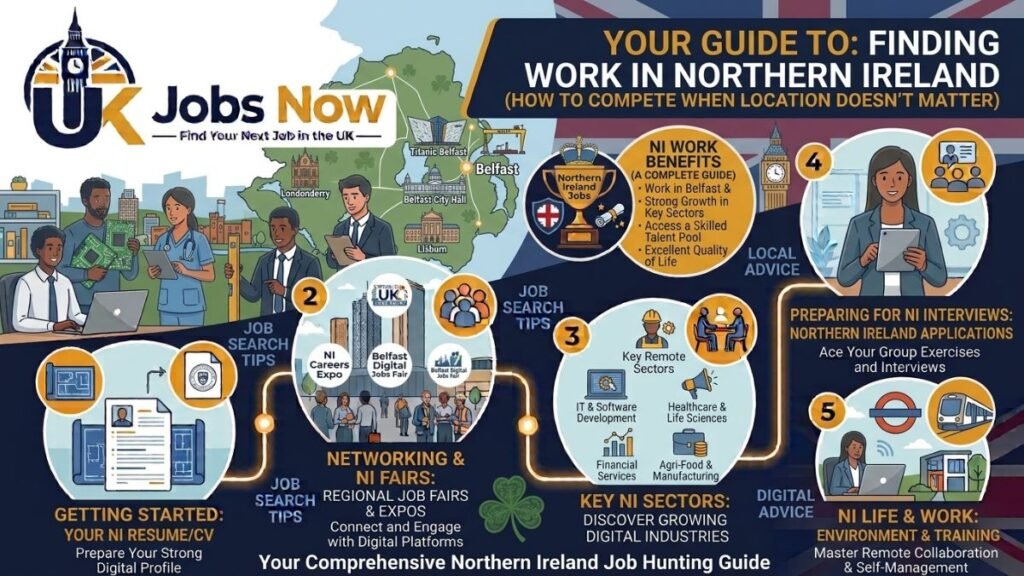
Belfast’s job market has transformed substantially over recent decades, building a genuinely significant technology and financial services sector alongside its long-established creative industries strength, connected in part to major film and television production based in the city. This is a practical guide to what Belfast and the wider Northern Ireland job market actually offer, and the specific practical considerations worth understanding if you’re job hunting here.
Belfast’s technology and financial services growth
Belfast has developed a genuinely significant technology sector over the past fifteen to twenty years, attracting substantial investment from major global technology and financial services companies establishing meaningful operations in the city, often citing Belfast’s combination of strong local talent, competitive operating costs, and time zone alignment with both UK and, for some operations, US business hours, making it a practical base for companies serving customers across multiple markets. This growth has been particularly pronounced in fintech, cybersecurity, and software development, representing a real, substantial shift in the city’s economic profile from its historical industrial and manufacturing identity, and one that continues to attract further inward investment as the sector’s local reputation strengthens.
Creative industries and screen production
Belfast has built a genuinely distinctive creative industries reputation, particularly connected to major film and television production based in and around the city, which has supported a wider ecosystem of production companies, studio facilities, and creative freelancers working across screen media, film, and television alike. This concentration offers real opportunity across production, technical, and creative roles, and it’s worth researching directly if screen industries work interests you specifically, since Belfast represents a genuinely significant UK production hub outside London, with studio infrastructure that continues to attract major international film and television productions to the region.
Understanding Northern Ireland’s distinct context
It’s worth understanding that Northern Ireland operates with its own distinct political and administrative context within the UK, including its own devolved government structures when functioning, and a specific relationship with both the rest of the UK and the Republic of Ireland that’s worth being aware of, particularly for roles connected to cross-border trade, EU-facing business, or public sector and government work specifically, given the ongoing practical implications this relationship carries for certain industries. This context doesn’t typically affect most private sector job applications directly, but it’s genuinely relevant background for public sector, government, and certain regulated industry roles, and worth understanding before applying to any position with a clear governmental or cross-jurisdictional dimension.
How Belfast pay and cost of living compare
As covered more generally in our guide to UK regional salaries, Belfast pay for comparable professional roles, particularly in technology and financial services, has become increasingly competitive with mainland UK regional cities, reflecting the genuine, sustained investment the city has attracted in these sectors over an extended period. Belfast’s cost of living, including housing, remains genuinely more affordable than most mainland UK regional cities, meaning the realistic disposable income comparison for many roles can be genuinely favourable, particularly for professionals in the city’s growing technology sector.
A practical summary
| Factor | What to know |
|---|---|
| Sector strengths | Technology and financial services (fintech, cybersecurity, software), creative industries and screen production |
| Pay versus mainland UK | Increasingly competitive in technology and financial services specifically |
| Cost of living | Genuinely more affordable than most mainland UK regional cities |
| Context | Distinct political and administrative context worth understanding for public sector and certain regulated roles |
Public sector and healthcare employment in Northern Ireland
Northern Ireland operates its own distinct public sector and health service structures, separate from NHS England, Scotland, and Wales, which is directly relevant if you’re targeting public sector work or non-clinical healthcare roles specifically — application processes and organisational structures differ from the equivalent mainland UK systems, and it’s worth researching Northern Ireland-specific recruitment channels directly rather than assuming the same processes apply, since job listings and application portals are often genuinely separate from their mainland equivalents.
Graduate opportunities and Belfast’s universities
Belfast is home to well-regarded universities with strong technology, business, and creative arts programmes, supporting a genuinely strong local graduate labour market that aligns closely with the city’s core sector strengths across technology, business, and the creative arts. Many Belfast-based technology and financial services employers run structured graduate schemes specifically designed to retain this local talent, reflecting a genuine, deliberate strategy by both employers and government bodies to build sustainable local career paths rather than losing graduates to emigration, which has historically been a significant pattern in Northern Ireland, and one that recent sector growth has genuinely started to shift.
Networking and Belfast’s professional community
Belfast has developed a genuinely active professional networking scene over recent years, particularly within its growing technology sector, supported by dedicated local organisations focused on promoting Belfast’s economic growth and attracting further inward investment from global companies. The city’s relatively contained size compared to much larger UK cities makes direct networking a genuinely effective strategy — professional circles within a specific Belfast sector are often smaller and more interconnected than the equivalent in a much larger city, meaning a handful of genuine, well-maintained connections can carry disproportionate value compared to a large but shallow network. Our guide to using LinkedIn effectively and guide to networking for introverts both remain directly relevant here.
Working across the Northern Ireland-Republic of Ireland border
Given Belfast’s proximity to the border with the Republic of Ireland, some roles and career paths genuinely span both jurisdictions, particularly within technology, financial services, and certain professional services firms with operations on both sides. If you’re open to this kind of cross-border opportunity, it’s worth understanding that working arrangements, tax, and employment law differ between the two jurisdictions, and specific professional advice is worth seeking if you’re considering a role that genuinely spans both jurisdictions, rather than assuming the two systems are interchangeable in how they treat employment and taxation.
Belfast’s construction and infrastructure sector
Alongside its better-known technology and creative industries growth, Belfast has seen substantial investment in construction and infrastructure over recent years, connected to both the city’s ongoing regeneration and its growing commercial property needs as more companies establish or expand their local operations. This has translated into genuine, ongoing opportunity across construction and skilled trades, alongside the professional services (architecture, project management, surveying) that support major development projects, representing a real and often underdiscussed part of Belfast’s current economic growth that’s worth researching alongside the city’s more commonly cited technology and creative industries strengths.
Getting started
You can browse current active UK job listings filtered to Northern Ireland to see current openings across Belfast’s technology and financial services sector, its creative and screen production industries, and its public sector and healthcare employment.
Frequently Asked Questions
Is Belfast a good city for technology careers?
Yes, genuinely — Belfast has attracted substantial investment from major global technology and financial services companies over the past fifteen to twenty years, particularly in fintech, cybersecurity, and software development.
Why has Belfast attracted so much technology investment?
Companies often cite the combination of strong local talent, competitive costs relative to London and other major cities, and favourable time zone alignment with both UK and, for some operations, US business hours.
Is Belfast a strong market for creative and screen industry careers?
Yes — Belfast has built a genuinely significant reputation connected to major film and television production based in the city, supporting real opportunity across production, technical, and creative roles.
Does Northern Ireland use the same NHS recruitment system as the rest of the UK?
No — Northern Ireland operates its own distinct health service and public sector structures, separate from NHS England, Scotland, and Wales, with different application processes worth researching directly.
Is Belfast’s cost of living lower than mainland UK cities?
Generally yes — Belfast remains genuinely more affordable than most mainland UK regional cities, which can meaningfully improve the realistic disposable income comparison for many roles, particularly in its growing technology and financial services sector.
Can I work a role that spans both Northern Ireland and the Republic of Ireland?
Some roles genuinely do, particularly within technology and financial services firms with operations on both sides of the border, though working arrangements, tax, and employment law differ between the two jurisdictions and specific professional advice is worth seeking for this kind of cross-border role.
Is construction a growing sector in Belfast?
Yes — substantial investment in construction and infrastructure connected to the city’s ongoing regeneration and growing commercial property needs has created genuine, ongoing opportunity across both trades and supporting professional services.