Cleaning Jobs in the UK: Pay, Requirements, Where to Apply
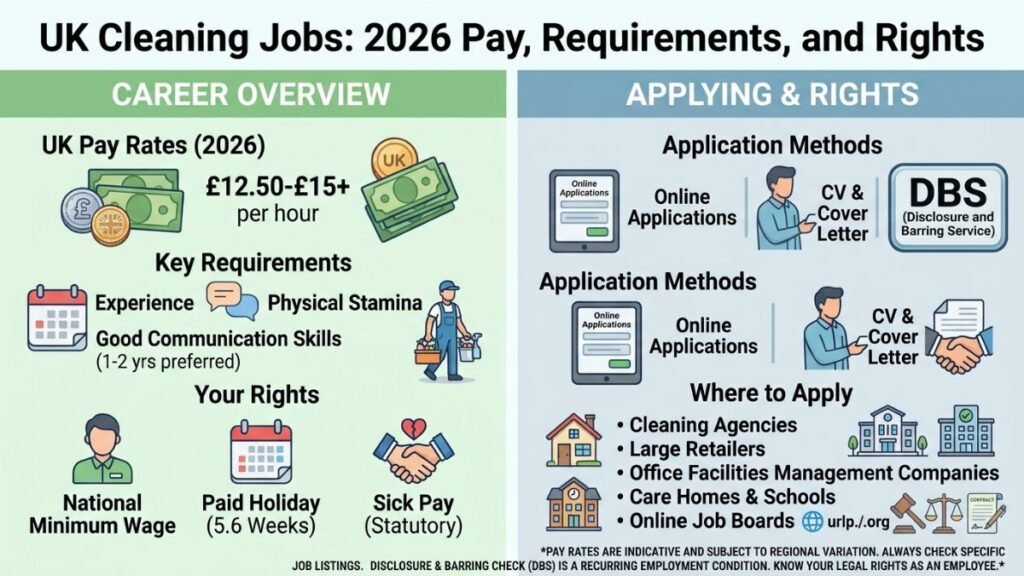
Cleaning is one of the most accessible ways to find work in the UK. There are jobs in offices, hospitals, schools, hotels, airports, shops and private homes, most need no qualifications, and many offer part-time or flexible hours. This guide covers the types of cleaning jobs, what they pay in 2026, what employers ask for, your rights, and where to find vacancies.
Quick answer: Most cleaning jobs need no experience or qualifications, but you must have the right to work in the UK. Pay usually starts at or just above the National Living Wage (£12.71 an hour for age 21 and over from April 2026), with supervisors and specialists earning more.
Types of cleaning jobs
Cleaners work in many different settings. The type of job affects your hours, pay and the checks you will face.
- Office and commercial cleaning: Often early morning, evening or night shifts, so cleaning is done when buildings are empty. Usually run by contract cleaning companies.
- Domestic cleaning: Cleaning private homes, either for an agency or as a self-employed cleaner. Hours are often between 9am and 3pm, and you may work alone.
- Hospital and healthcare cleaning: Cleaning wards, theatres and clinics to infection-control standards. Often employed by NHS trusts or contractors.
- School and university cleaning: Mostly before and after the school day, and in the holidays.
- Hotel housekeeping: Cleaning rooms and public areas, often with weekend work.
- Retail and supermarket cleaning: Keeping stores clean during or outside opening hours.
- Airport and transport cleaning: Cleaning terminals, aircraft cabins, trains and buses. Airside roles need security vetting, which we explain in our guide to how to get an airport job in the UK.
- Specialist cleaning: Industrial, window, carpet, deep cleaning, end-of-tenancy and biohazard cleaning, which pay more but need training.
Browse current cleaning vacancies on our UK jobs board.
How much do cleaners get paid?
Pay depends on the employer, the type of cleaning, the shift and where you live.
Typical pay in 2026
- Starting pay for many cleaners is based on the National Minimum Wage or National Living Wage. From 1 April 2026 the National Living Wage is £12.71 an hour for workers aged 21 and over, £10.85 for ages 18 to 20 and £8.00 for under-18s and apprentices. See our full guide to the National Minimum Wage 2026.
- Domestic cleaning agencies often advertise higher rates. Examples from 2026 adverts include £13 to £14.50 an hour for part-time cleaners in outer London and £13 to £16 an hour in parts of the South East and South West. Job site estimates put average advertised pay at about £13.30 to £13.80 an hour, though these are only approximate.
- Supervisors typically earn around £15 an hour, according to careers guidance.
- Self-employed cleaners with their own business may charge customers around £20 to £30 an hour, but that income has to cover your costs, travel, insurance, tax and time without work.
Night shifts, weekends and overtime can pay more. Check the advert for premiums, and for whether the pay quoted is for the whole shift or only the cleaning time.
What a week might look like
| Hours per week | At £12.71 an hour (before tax) |
|---|---|
| 15 hours | £190.65 |
| 20 hours | £254.20 |
| 30 hours | £381.30 |
| 40 hours | £508.40 |
Your take-home pay will be lower after tax, National Insurance and pension contributions. Many part-time cleaners earn below the Income Tax threshold, but this depends on your total income.
Requirements to become a cleaner
Basic requirements
- Right to work in the UK. Employers must check this before you start. They will ask to see your passport or share code and other documents.
- Reliability. Turning up on time and doing a thorough job matters more than experience.
- Reasonable fitness. The work involves standing, bending, lifting and carrying equipment.
- References. Some employers, especially for homes, schools and healthcare, ask for references from a past employer or other referee.
- Flexibility. Early starts, split shifts and evenings are common.
Qualifications and training
You do not usually need any formal qualification to start. Employers normally provide training on cleaning methods, chemicals and equipment. If you want to progress, you can take courses such as those offered by the British Institute of Cleaning Science (BICSc), or training in health and safety, manual handling and COSHH (the rules about handling hazardous substances).
Background checks
Some workplaces ask for extra checks:
- Schools, care homes and hospitals often need an enhanced DBS check, because you may work near children or vulnerable adults. In Scotland this is a PVG scheme check, and in Northern Ireland an AccessNI check. The employer normally arranges it, and you should not pay a third party for it.
- Airports and secure sites require vetting, such as a five-year employment and address history. See our airport jobs guide.
- Private homes may ask for references and sometimes a basic DBS certificate.
If an employer asks you to pay a fee for a “job guarantee”, uniform or equipment before you start, treat it as a warning sign. Read our guide to how to spot a fake job advert in the UK.
Where to apply for cleaning jobs
Contract cleaning companies
Large facilities management and cleaning contractors hire cleaners for offices, hospitals, schools, retail and public buildings. Employers in this sector include companies such as Mitie, ISS, OCS, Sodexo and Compass Group, and their careers pages list local vacancies.
Domestic cleaning agencies
Agencies match cleaners to homes and handle booking and payment. Examples that advertise in 2026 include Housekeep and Maid2Clean. Check whether you would be employed or self-employed, since that changes your rights and who pays your tax.
The NHS, councils and schools
NHS trusts, local councils and schools advertise cleaning and domestic roles on their own websites and on the NHS Jobs website. These roles often come with pension schemes and set pay grades.
Hotels, shops and airports
Hotel groups, supermarkets and airports hire cleaners and housekeepers directly. Check each employer’s careers page.
Job boards and government services
Use the government’s Find a Job service, major job boards and our own job listings. Use filters for location and hours. Local Jobcentre Plus offices can also advise.
Be careful with informal adverts
Facebook groups, Gumtree and community noticeboards have genuine jobs, but also scams and cash-in-hand work with no protection. Never pay to get a job, and avoid giving ID copies to anyone you have not checked.
How to apply: step by step
- Decide what you want. Pick the type of cleaning, hours and travel distance that suit you.
- Prepare a simple CV. List any work, volunteering or caring experience, and say what shifts you can work. Employers value reliability.
- Gather your documents. Have your right-to-work documents, ID and National Insurance number ready.
- Apply directly. Use the employer’s own website where possible.
- Prepare for a short interview. Expect questions about your availability, reliability and how you would handle tasks.
- Complete checks and training. Your employer will explain these, and should pay for them.
- Read your contract. Check pay, hours, holiday, sick pay and notice. Our guide to understanding your employment contract can help.
Typical interview questions
- Why do you want to work as a cleaner?
- What days and times can you work?
- How would you organise a room or area that needs cleaning?
- What would you do if you found something valuable or a broken item?
- How do you work on your own, and with a team?
Your rights as a cleaner
Cleaners often work for contractors, in shifts and in several locations, which makes it important to know the basics.
- Minimum wage. You must be paid at least the minimum for your age. Time spent travelling between jobs on the same shift, and time you are required to wait, can count as working time.
- Holiday pay. Most workers are entitled to paid annual leave, including part-time and zero-hours workers.
- Sick pay. Since April 2026, Statutory Sick Pay is payable from the first day of sickness for those who qualify. Read our guide to the Employment Rights Act 2025.
- Payslips and contracts. You should get a written statement of the main terms and a payslip, and you should be paid through payroll, with tax and National Insurance handled properly.
- Health and safety. Your employer must provide training and protective equipment, such as gloves, when handling chemicals.
- Cash-in-hand risks. Being paid cash with no payslip means no record of your earnings, holiday or sick pay, and problems with benefits or mortgages later.
If you are underpaid, keep records and contact Acas for free advice, or report it to HMRC.
Employed or self-employed?
Some domestic cleaners are self-employed, working for themselves or through an agency app. This can give flexibility and higher hourly rates, but you pay your own tax and National Insurance, buy your own supplies, and do not get paid holiday or sick pay. If you earn more than the £1,000 trading allowance in a tax year, you generally need to register for Self Assessment. You should also consider public liability insurance. Be wary of being called “self-employed” if the company controls your hours, uniform and work in the way an employer would. Acas or Citizens Advice can help you check your status.
Career progression
Cleaning can lead to better-paid roles. Common routes include:
- Team leader or supervisor, often about £15 an hour
- Contracts manager or area manager in a cleaning company
- Specialist roles, such as healthcare, industrial or window cleaning
- Starting your own cleaning business
- Moving into facilities management, housekeeping management or caretaking
Training such as BICSc qualifications and health and safety courses helps you move up.
Frequently asked questions
Do I need experience to get a cleaning job? No. Most employers train new cleaners, and reliability matters more than experience.
How much do cleaners earn per hour in the UK? Many start at the National Living Wage of £12.71 an hour (aged 21 and over). Agency and specialist roles may pay more, and supervisors earn around £15 an hour.
Do cleaners need a DBS check? Only for some jobs, such as in schools, care homes and healthcare. The employer should arrange it.
Can I work as a cleaner part time? Yes. Many cleaning jobs are part time or have flexible hours.
Can I clean homes and be self-employed? Yes, but you will be responsible for your own tax, insurance and equipment.
Is travel time between cleaning jobs paid? Often yes, if you are travelling between sites during a working day for the same employer. Ask your employer, or check with Acas if you are unsure.
Final thoughts
Cleaning jobs are easy to start and plentiful, but the details matter: check your pay against the legal minimum, read your contract, and be careful about cash-in-hand offers and fees. When you are ready to look for work, browse the latest cleaning and other vacancies on our jobs board and apply directly with each employer.
This article is general information, not legal or financial advice. Pay and rules change, so check the job advert, the employer and GOV.UK for the latest details.