Student Jobs in the UK: Balancing Work and Study
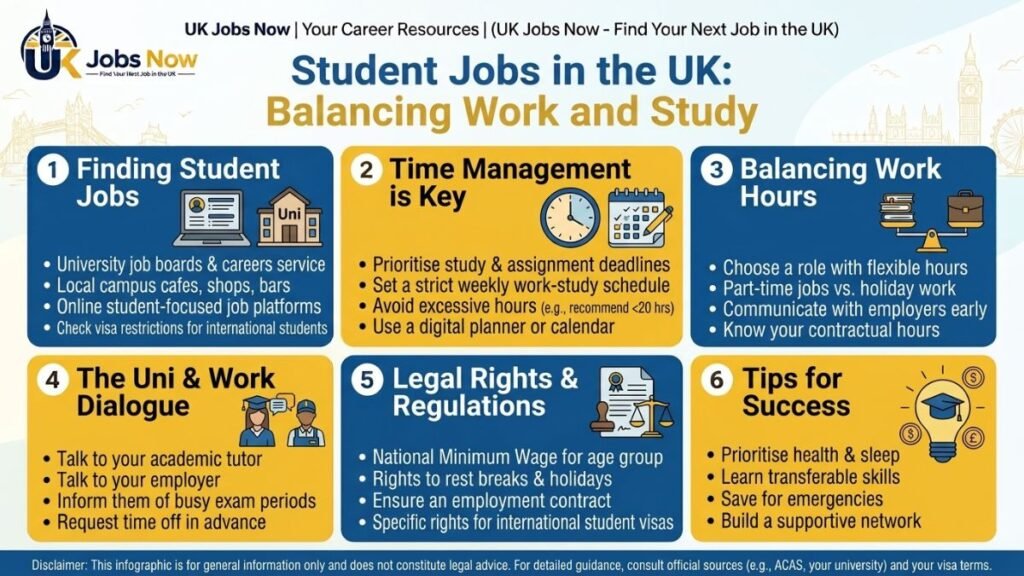
Balancing paid work with a full course load is one of the more genuinely demanding logistical challenges of student life, and getting the balance wrong in either direction — working too much and letting studies suffer, or avoiding work entirely and facing genuine financial strain — is a real, common problem worth planning around deliberately rather than figuring out reactively partway through a term. This is a practical guide to how student work in the UK actually functions, what’s realistic to take on, and where to look.
How much can you realistically work while studying
There’s no single correct answer here, since it depends on your specific course intensity, your personal capacity, and your financial need, but it’s worth being honest with yourself about realistic limits rather than assuming you can maintain full academic performance alongside a heavy work schedule without any trade-off. Many students find somewhere in the range of eight to fifteen hours a week during term time genuinely manageable alongside a full course load, though this varies considerably by individual and by how demanding a specific course is — a more intensive course with significant contact hours and assessment load leaves less realistic capacity than a course with a lighter weekly structure.
If you’re an international student, check your visa conditions first
This is genuinely important and worth checking before anything else if it applies to you — international students on a UK student visa are typically subject to specific restrictions on the maximum number of hours they can work during term time, and sometimes on the type of work permitted. These conditions are set by your specific visa category and it’s essential to check the current, exact rules directly rather than relying on general assumptions, since exceeding your permitted working hours is a genuine breach of your visa conditions with serious consequences. Your university’s international student support service is generally the most reliable, specific source for this.
Common student job types
| Role type | Why it suits student schedules |
|---|---|
| Retail | Widely available with flexible, often part-time or zero-hours scheduling |
| Hospitality | Evening and weekend shifts often align well with daytime study commitments |
| On-campus roles | Many universities directly employ students in libraries, student unions, and administrative roles, often with built-in scheduling flexibility around term dates |
| Tutoring | Flexible, often well-paid relative to other student jobs, and directly relevant if you’re studying a subject you can tutor others in |
| Freelance or gig work | Highly flexible scheduling, though income can be less predictable than a fixed part-time role |
On-campus jobs specifically worth considering
University-run job schemes, often advertised directly through your students’ union or careers service, are worth checking specifically, since they’re frequently designed with genuine awareness of academic scheduling constraints — many explicitly build in flexibility around exam periods and coursework deadlines in a way an external retail or hospitality employer might not automatically offer. These roles also tend to be conveniently located on or near campus, reducing the practical time cost of commuting to and from a shift around your study schedule.
Balancing work with your studies practically
A few practical habits genuinely help maintain this balance: being upfront with an employer from the outset about your availability during exam periods, rather than discovering a scheduling conflict close to the exams themselves; using a shared calendar to track both your academic deadlines and work shifts together, so conflicts are visible well in advance rather than discovered at the last minute; and being realistic and willing to reduce your hours during particularly demanding academic periods, even if this means a temporary reduction in income, since academic performance issues tend to have longer-lasting consequences than a short-term dip in earnings.
Student jobs and part-time work rights
Student workers, whether working full-time-equivalent hours during holidays or part-time during term, hold the same fundamental statutory employment rights as any other worker of the same status, covered in more depth in our guide to part-time work and guide to zero-hours contracts — minimum wage entitlement (at the appropriate age-based rate), proportional holiday pay, and protection from discrimination, regardless of your status as a student.
Using student jobs to build genuinely relevant experience
Beyond the immediate income, it’s worth thinking deliberately about whether a student job can also build experience relevant to your eventual career direction, rather than treating every role purely as a source of income with no longer-term value. Even a seemingly unrelated retail or hospitality role builds genuinely transferable skills — covered in more depth in our guide to customer service career skills — that are worth explicitly describing on a future CV using the same specific, results-focused language covered in our CV writing guide, rather than assuming a student job has no genuine relevance to your eventual professional application.
Summer and holiday work
University holiday periods offer genuine opportunity for more intensive work, including full-time-equivalent summer roles, seasonal work, or a structured internship if you’re specifically building toward a particular career direction, covered in more depth in our guide to UK internships. It’s worth planning holiday work deliberately in advance, since genuinely good opportunities, particularly structured internships at larger employers, are often advertised and filled well before the holiday period itself begins.
Managing tax and pay as a student worker
Student workers are subject to the same tax and National Insurance rules as any other worker — there’s no automatic student exemption from income tax, though most students working a modest number of hours won’t earn enough across the year to exceed the personal tax-free allowance in the first place. It’s worth understanding your own likely earnings against the current personal allowance threshold, checked directly on GOV.UK, and if you believe you’ve been taxed incorrectly on income that falls below the threshold, you’re entitled to claim this back directly through HMRC rather than simply accepting an incorrect deduction from your pay without question.
Building relationships with employers who understand student schedules
Once you’ve found an employer genuinely willing to work around your academic commitments, it’s often worth staying with them across your degree rather than repeatedly job-hunting each term, since a trusted, established relationship with a genuinely flexible employer tends to be considerably more valuable long-term than the marginal benefit of switching roles frequently in search of a slightly better hourly rate somewhere else entirely. Employers who’ve already demonstrated genuine flexibility around your exam periods and coursework deadlines are a genuinely valuable, somewhat scarce resource worth protecting once you’ve found one.
Volunteering as an alternative or supplement to paid work
If your financial situation allows it, or alongside paid work, volunteering during your studies can build genuinely relevant experience and connections, particularly if it’s directly related to your intended career field — many students find that a mix of modest paid work and targeted volunteering in their area of interest builds a stronger overall CV than either pursued exclusively, since the two serve genuinely different purposes: paid work demonstrates reliability and general workplace skills, while relevant volunteering demonstrates specific, targeted interest in your intended field.
Getting started
You can browse current active UK job listings filtered by the part-time job type and your local area to see current openings genuinely suited to a student schedule, alongside checking your university’s own careers service and students’ union job listings directly.
Frequently Asked Questions
How many hours a week is reasonable to work as a UK student?
There’s no single correct figure, but many students find somewhere around eight to fifteen hours a week during term time manageable alongside a full course load — the right amount depends on your specific course intensity and personal capacity.
Are international students allowed to work while studying in the UK?
Generally yes, but subject to specific hour restrictions tied to your particular visa category — it’s essential to check the current, exact rules directly through your university’s international student support service before starting any work.
Do university on-campus jobs pay less than external jobs?
Not necessarily — pay varies by role, but on-campus jobs often offer a genuine advantage in scheduling flexibility around academic commitments, which can be worth more in practice than a marginally higher hourly rate elsewhere.
Can a student job help my future career, or is it just for income?
It can genuinely help — even a seemingly unrelated retail or hospitality role builds transferable skills worth describing specifically on a future CV, and it’s worth thinking about student work as potential relevant experience, not purely as short-term income.
Should I reduce my working hours during exam periods?
Generally yes, if genuinely needed — being realistic and communicating this with your employer in advance tends to work better than risking academic performance for a short-term income gain, since academic consequences typically last longer than a temporary reduction in earnings.