Probation Periods Explained: Your Rights as a New Employee
Starting a new job carries a specific, low-level anxiety during the probationary period that most people recognise but don’t always fully understand the actual mechanics of — how long it genuinely lasts, what rights you actually have during it, and whether “failing probation” means something different in practice to a standard dismissal. This is a practical, clear guide to how UK probation periods actually function, and what your genuine rights are throughout.
What a probation period actually is
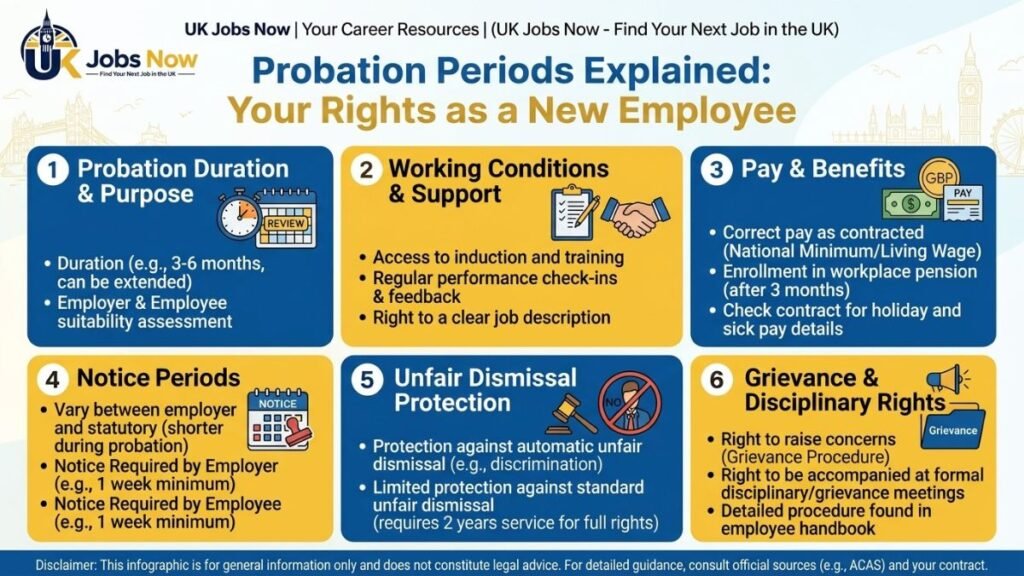
A probationary period is an initial phase of employment, specified in your contract, during which an employer formally assesses whether you’re a genuine, ongoing fit for the role, and during which you similarly assess whether the role and organisation genuinely suit you. It’s not a distinct legal employment status in itself — you’re still a genuine employee with statutory rights from day one — but certain specific rights, most notably full protection against unfair dismissal, only apply once you’ve reached a minimum length of continuous service, which typically extends well beyond a standard probationary period in most cases.
How long do UK probation periods typically last
There’s no single fixed statutory length for a probation period — it’s set by the individual employment contract, and commonly ranges from three to six months, though it can be shorter or, less commonly, longer depending on the specific role and employer. It’s worth checking your specific contract for the exact length and any conditions around extension, since some contracts explicitly allow an employer to extend probation under certain circumstances rather than making an immediate, final pass-or-fail decision at the originally stated end date.
Your employment rights during probation
During probation, you retain the same fundamental statutory rights as any employee — the National Minimum Wage or National Living Wage, statutory holiday entitlement, protection from unlawful discrimination, and the right to a safe working environment, among others. What differs is your protection against unfair dismissal specifically: this generally requires two years of continuous service to claim in most circumstances (with some specific exceptions, such as dismissal connected to certain protected characteristics or whistleblowing, which don’t require this qualifying period). This means an employer can generally end your employment during probation more straightforwardly than they could once you’ve built up longer service, provided the dismissal doesn’t fall into one of the specific protected exception categories.
Can you be dismissed during probation without a specific reason?
In most circumstances, yes — because full unfair dismissal protection typically requires two years of continuous service, an employer can generally end employment during probation without needing to demonstrate the same level of formal justification that would be required for a longer-serving employee, provided the underlying reason isn’t connected to a protected characteristic (discrimination based on things like age, sex, disability, race, religion, or similar) or another specifically protected reason such as whistleblowing or exercising a statutory right. It’s worth understanding this distinction clearly, since it genuinely changes what recourse is realistically available to you if you believe a specific probation dismissal was handled unfairly.
Notice periods during probation
As covered in more depth in our guide to UK notice periods, many contracts specify a shorter notice period during probation than applies once probation is successfully completed — sometimes as little as one week on either side. It’s worth checking your specific contract’s probation-specific notice terms directly, since these genuinely differ from the standard post-probation notice period in many employment contracts.
What happens if probation is extended rather than passed or failed outright
| Outcome | What it typically means |
|---|---|
| Probation passed | Employment continues under standard (non-probationary) terms, including the longer standard notice period |
| Probation extended | Usually indicates specific, addressable concerns the employer wants more time to assess — worth asking directly what these are |
| Probation failed / employment ended | Employment ends, generally with the shorter probationary notice period applying |
If your probation is extended: what to do
If your employer extends your probation rather than confirming it outright, it’s worth asking directly and specifically what concerns are driving the extension and what would need to change for probation to be successfully completed — a vague or extended probation without clear, specific feedback is less useful to you than a direct conversation about exactly what’s expected. Treating an extension as a genuine opportunity to address specific, named concerns, rather than a vague, ongoing uncertainty, tends to produce a better outcome than simply hoping the situation improves without clarity on what’s actually required.
Getting feedback during probation
It’s entirely reasonable, and often genuinely useful, to proactively ask for feedback during your probation period rather than waiting passively until the formal end date — most managers are receptive to this kind of check-in, and it gives you the chance to address any concerns while there’s still time to do so, rather than being surprised by an issue only at the final review. A simple, direct request — “I’d really value some early feedback on how things are going so far, and anything I should focus on” — is a professional, low-risk way to open this conversation with almost any reasonable manager.
Should probation status affect how you approach a new role?
It’s worth striking a reasonable balance — being genuinely engaged, proactive, and open to feedback during probation is sensible and reflects well regardless of the formal probationary status, but excessive anxiety about probation specifically tends to be unproductive and can, somewhat ironically, affect your actual performance and confidence more than the underlying probationary status itself would. Approaching a new role professionally and diligently, as you would regardless of probation, is generally the right level of attention to bring, rather than a heightened, anxious version of normal professional conduct.
Probation periods for internal moves and promotions
It’s worth knowing that some employers apply a probationary-style review period to internal promotions or role changes as well, not just genuinely new hires — this isn’t universal practice, but where it applies, it’s worth understanding the specific terms, since an unsuccessful outcome for an internal probation might mean returning to your previous role rather than losing employment with the company entirely, which is a meaningfully different, generally less severe practical outcome than a probation dismissal for a genuinely new external hire would represent.
How probation is typically assessed in practice
Most employers assess probation against a mix of formal and informal signals — whether you’re meeting the core responsibilities of the role, how you’re integrating with the team, general reliability and conduct, and often specific, agreed objectives set at the start of your employment. Understanding what specifically you’re being assessed against, ideally clarified directly with your manager early in your employment rather than assumed, gives you a much clearer, more actionable target to work toward than trying to guess at unstated expectations throughout the entire probationary period.
Getting started
If you’re currently navigating a probation period, understanding your specific contract’s terms and having open, proactive communication with your manager tends to produce the best outcome. If you’re job searching more broadly, you can browse current active UK job listings to see current openings across sectors.
Frequently Asked Questions
How long is a typical UK probation period?
There’s no single fixed statutory length — it’s set by the individual employment contract and commonly ranges from three to six months, though it varies by employer and role.
Can I be dismissed during probation without a specific reason given?
In most circumstances, yes, since full unfair dismissal protection typically requires two years of continuous service — though dismissal connected to a protected characteristic or another specifically protected reason remains unlawful regardless of probationary status.
Is my notice period shorter during probation?
Often yes — many contracts specify a shorter notice period specifically during probation than applies once it’s successfully completed, so it’s worth checking your specific contract terms directly.
What should I do if my employer extends my probation period?
Ask directly and specifically what concerns are driving the extension and what would need to change for probation to be successfully completed, so you have clear, actionable feedback rather than vague, ongoing uncertainty.
Should I ask for feedback during probation, or wait for the formal review?
It’s generally worth proactively asking for feedback earlier rather than waiting — this gives you the chance to address any concerns while there’s still time, rather than being surprised only at the final formal review.
Do internal promotions ever come with a probation period too?
Sometimes, yes — some employers apply a review period to internal moves as well, though an unsuccessful outcome for this kind of internal probation might mean reverting to your previous role rather than losing your job entirely, a meaningfully different outcome from external-hire probation.