How to Start a Career in Engineering (Routes Beyond a Degree)
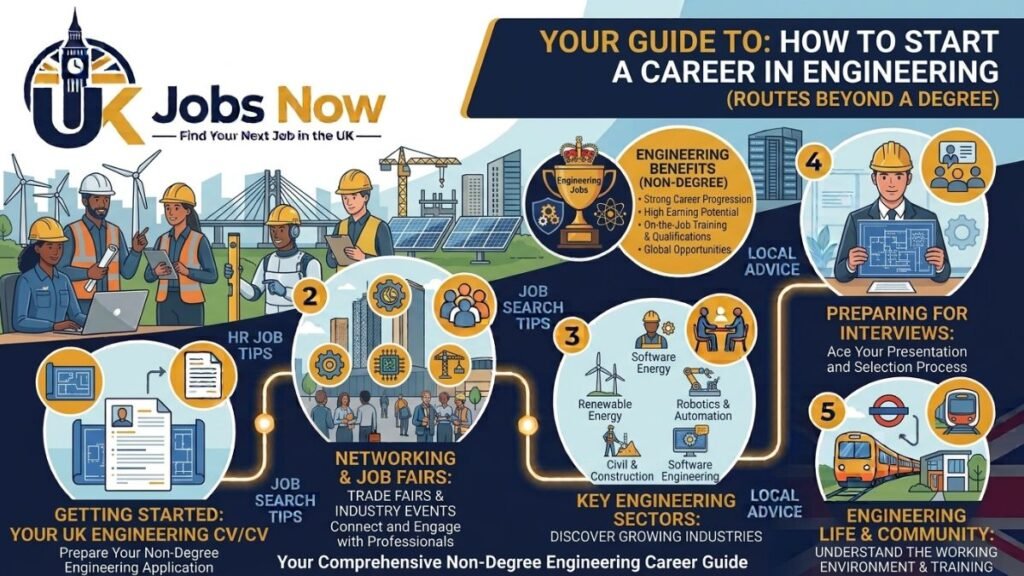
Engineering is often assumed to require a specific, linear path — a relevant degree, followed by a graduate engineering role, with little room for entry any other way. That’s true for some specialisms and some employers, but UK engineering also has a genuinely well-established apprenticeship and vocational route that leads to full, chartered-level professional status without a traditional degree being the only way there — a path that’s less visible in general career advice than it deserves to be.
Understanding the different routes into UK engineering
It’s worth mapping out the main entry paths clearly, since they lead to genuinely comparable long-term outcomes despite looking quite different at the start.
The traditional degree route
A relevant engineering degree, often followed by a structured graduate scheme with a larger employer, remains a well-established and common path, particularly for specialisms with more theoretical or research-heavy foundations. Graduate schemes typically combine structured rotational experience across different areas of a business with formal support toward professional chartered status.
Degree apprenticeships
A genuinely strong hybrid option — combining full-time paid employment with part-time degree study, typically over four to six years, resulting in both a full engineering degree and, unlike the traditional route, several years of direct, paid professional experience already built by graduation. This route has grown significantly in availability across UK engineering employers and is worth serious consideration alongside the traditional full-time degree path.
Standard apprenticeships without a degree component
Combining paid, structured on-the-job training with study toward a recognised engineering qualification (often up to HNC/HND level) without necessarily including a full honours degree, this route can still lead to full professional registration over time, particularly combined with further study or experience-based progression later in your career.
Progression from a related technical trade
For some engineering disciplines, particularly more hands-on mechanical or electrical engineering roles, progression from a related skilled trade — building genuine, extensive practical experience before moving into a more formally recognised engineering role — is a real, if less commonly discussed, path, particularly for those who started their working life in a trade and later want to formalise and extend that practical expertise.
Comparing the main routes
| Route | Typical duration | Key trade-off |
|---|---|---|
| Traditional degree + graduate scheme | 3-4 years study, then 1-3 years structured graduate programme | No income during study; strong structured professional development once employed |
| Degree apprenticeship | 4-6 years, combining work and study | Slower to complete than a full-time degree, but earning throughout with direct experience already built |
| Standard apprenticeship (no full degree) | 2-4 years, depending on level and discipline | Faster into paid work; may require further study later for full chartered status depending on discipline |
| Trade progression | Variable, often longer and less formally structured | Builds deep practical experience early; formal recognition may take longer to establish |
Understanding professional registration and chartered status
UK engineering has a formal professional registration system, administered through the Engineering Council via various professional engineering institutions specific to different disciplines, with recognised levels including Engineering Technician (EngTech), Incorporated Engineer (IEng), and Chartered Engineer (CEng). Each level has defined educational and experience requirements, and — importantly for anyone without a traditional degree — there are recognised routes to each level, including IEng and even CEng, through a combination of relevant qualifications and demonstrated professional experience, not solely through an accredited degree. It’s worth researching the specific requirements for your discipline and target registration level directly through the relevant professional institution, since requirements vary between engineering disciplines.
Choosing a specific engineering discipline
“Engineering” spans genuinely distinct disciplines with different day-to-day work, different typical entry routes, and different demand patterns — mechanical, electrical, civil, chemical, aerospace, and software/systems engineering are among the broadest categories, each with further specialisms within them. It’s worth researching the actual day-to-day reality of a specific discipline you’re considering, ideally through informational conversations with people already working in it, before committing to a specific multi-year training route.
What employers look for beyond formal qualifications
Across all entry routes, employers consistently value genuine practical problem-solving ability, demonstrated through project work (whether from formal study, an apprenticeship placement, or genuine personal projects), and increasingly, comfort with relevant software and technical tools specific to the discipline. A candidate who can talk through a real, specific technical problem they’ve worked on — what the challenge was, how they approached it, what they learned — tends to interview more strongly than one who can only describe qualifications and theoretical knowledge in the abstract.
Career changers entering engineering
Moving into engineering from an unrelated field later in your career is a genuine, achievable path, though it typically requires a meaningful investment in relevant formal study or qualification, given the sector’s technical and, in many contexts, safety-critical nature. Apprenticeship routes are open to career changers with no upper age limit, and some professional institutions offer specific pathways recognising substantial relevant experience from an adjacent technical field, which is worth investigating directly if you’re coming from a related but distinct technical background. Our broader guide to changing careers in the UK covers the general principles of this kind of transition.
Getting started
Once you’ve identified a specific discipline and entry route that fits your circumstances, it’s worth researching specific employers running apprenticeship or graduate programmes in that discipline directly, alongside broader job searching. You can browse current active UK job listings filtered by the engineering category to see current openings across apprenticeship, graduate, and experienced roles.
Continuing professional development throughout an engineering career
Engineering is a genuinely fast-evolving field in most disciplines, and maintaining and progressing professional registration (from EngTech through to IEng or CEng, where relevant) typically requires ongoing continuing professional development (CPD) throughout your career, not just at the point of initial qualification. It’s worth understanding this as a standing, career-long expectation from the outset, rather than assuming professional development stops once you’ve achieved a specific qualification or registration level — most relevant professional institutions provide structured CPD frameworks and support to help members meet this expectation.
Specialising within your chosen discipline
Once established within a broad discipline, most engineers eventually specialise further into a specific niche — a particular type of structure within civil engineering, a specific industry application within mechanical or electrical engineering, or a specific technology area within software and systems engineering. This specialisation typically develops gradually through the projects and experience you accumulate, rather than needing to be decided definitively at the start of your career, so it’s worth staying genuinely open to different project types early on to discover what specific area you find most engaging before committing to a narrower specialism.
Engineering roles beyond direct technical work
It’s worth knowing that an engineering background also opens up progression into roles that draw on engineering knowledge without being purely technical day to day — project management, technical sales and business development for engineering products or services, and engineering management overseeing a team of engineers rather than working hands-on technically yourself. These paths are worth genuinely considering later in a career if your interests shift somewhat from purely technical work toward a broader, more people- or business-focused role, since a strong technical foundation remains genuinely valuable even in these more managerial or commercial engineering-adjacent positions.
Frequently Asked Questions
Can I become a chartered engineer without a university degree?
Yes, in many disciplines — the Engineering Council’s professional registration system includes recognised routes to Chartered Engineer status through a combination of relevant qualifications and demonstrated professional experience, not solely through an accredited degree, though the specific requirements vary by discipline and are worth researching directly through the relevant professional institution.
What’s the difference between a degree apprenticeship and a standard apprenticeship?
A degree apprenticeship combines full-time paid work with part-time study toward a full honours degree, typically over four to six years. A standard apprenticeship provides structured training and a recognised qualification, often up to HNC/HND level, without necessarily including a full degree.
Is it too late to start an engineering apprenticeship as a career changer?
No — there’s no upper age limit on UK apprenticeship eligibility, and engineering apprenticeships are genuinely open to career changers, not just school leavers, with some professional institutions also offering specific pathways for those with substantial relevant experience from adjacent technical fields.
Which engineering discipline has the most accessible entry routes?
This varies, but disciplines with strong apprenticeship traditions — mechanical and electrical engineering in particular — tend to offer a wide range of accessible non-degree entry routes, though it’s worth researching your specific area of interest directly, since apprenticeship availability and structure vary by discipline and region.
Do employers value apprenticeship-trained engineers as highly as degree-trained ones?
Generally yes, particularly once both have built comparable professional experience and registration — many employers specifically value the practical, hands-on experience apprenticeship-trained engineers bring from early in their training, alongside formal qualification.