
Internships in the UK: Paid, Unpaid and What’s Actually Legal
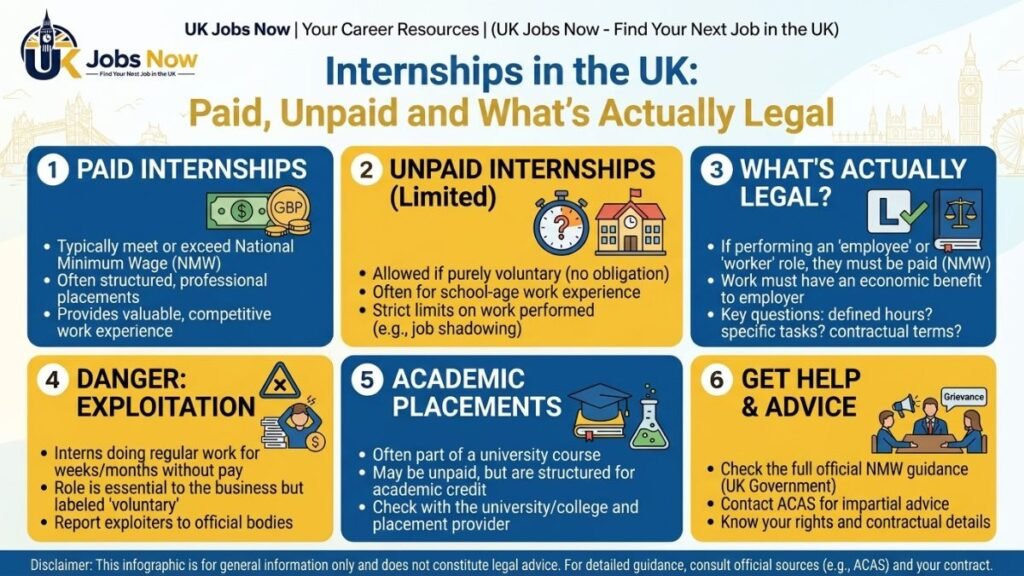
The question of whether an internship should be paid generates more confusion than almost any other part of UK employment practice, partly because the actual legal position is more specific and more favourable to interns than a lot of informal advice suggests. This is a practical, clear-eyed guide to internships in the UK — what’s actually legal, how to find genuinely worthwhile ones, and how to get real value from the experience once you’re in one.
The legal reality: are unpaid internships actually legal?
This is genuinely more nuanced than a simple yes or no, and it’s worth understanding the actual principle rather than relying on assumption. Under UK law, if an intern counts as a “worker” — broadly, if they’re required to attend at set times, given specific tasks that provide real value to the organisation, and given some assurance of work — they’re generally entitled to at least the National Minimum Wage for their age, regardless of whether the role is labelled an “internship” rather than a job. A genuinely unpaid arrangement is more likely to be lawful only in narrower circumstances — a short period of voluntary work shadowing with no set hours or required output, or a placement that’s a genuine, structured part of a UK further or higher education course. Simply calling a role an “internship” doesn’t exempt an employer from minimum wage law if the actual working arrangement meets the legal definition of a worker.
What this means practically when you’re offered an internship
If you’re offered an “internship” that involves set hours, defined responsibilities, and genuine work that benefits the organisation, you’re likely entitled to at least the National Minimum Wage for your age under UK law, and it’s worth being aware of this rather than assuming an unpaid arrangement is automatically legitimate simply because it’s labelled an internship. If you’re genuinely unsure about a specific offer’s legal status, ACAS provides free, impartial guidance on this exact question, and it’s a reasonable, low-risk step to check before accepting an unpaid arrangement that involves substantial, structured work.
Why genuinely good internships are still worth pursuing
None of the above should discourage you from pursuing internships generally — a well-structured, appropriately paid internship remains one of the most valuable ways to gain genuine, real workplace experience, build a professional network, and in many cases convert directly into a permanent offer. The key distinction is between a genuinely structured, legitimate internship programme — common at larger employers, often paid at least the National Minimum Wage and sometimes considerably more — and an informal arrangement that’s effectively asking for free labour dressed up in more appealing language.
Types of internship worth understanding
| Type | What to expect |
|---|---|
| Summer internship (typically for penultimate-year students) | Often a structured route into a subsequent graduate scheme at the same employer, usually paid at a competitive rate |
| Placement year (sandwich course) | A full academic year within a degree programme spent working, typically paid, and often converting into a graduate offer |
| Short-term or informal work experience | Higher risk of being unpaid or underpaid — worth checking the actual working arrangement carefully |
| Virtual or remote internships | Increasingly common, subject to the same underlying legal principles regardless of location |
Finding genuinely worthwhile internships
Larger employers running formal, structured internship programmes — often specifically as a pipeline into their graduate scheme, covered in more depth in our guide to UK graduate schemes — are generally the most reliable source of genuinely well-structured, appropriately paid internships, since these programmes are typically designed with clear legal and reputational awareness of what proper pay and structure genuinely require. It’s worth researching a specific employer’s internship programme directly, including checking independent reviews from previous interns where available, rather than simply accepting the programme’s own marketing description at face value without any further verification.
Getting genuine value from an internship
Once in an internship, the most valuable thing you can do beyond simply completing assigned tasks is actively seek out genuine responsibility and visibility — asking thoughtful questions, volunteering for additional project work where appropriate, and building real relationships with colleagues and managers, since a significant part of an internship’s long-term value comes from the network and professional reputation you build, not just the specific tasks completed day to day. If you’re hoping to convert the internship into a permanent offer, it’s also worth having a direct, honest conversation with your manager partway through about what that conversion process typically looks like, rather than assuming it will happen automatically.
What to do if you suspect you’re in an unlawful unpaid arrangement
If you believe you’re effectively working as an employee without being paid appropriately, it’s worth first checking your specific situation against ACAS guidance, and if you have genuine grounds for concern, raising it directly and professionally with the organisation, since many genuinely aren’t seeking to act unlawfully and may simply not have structured the arrangement correctly. If a direct conversation doesn’t resolve it, further formal advice or, in more serious cases, a claim to an employment tribunal, is a real, available route, though it’s worth seeking specific guidance on your particular circumstances before taking that step.
Preparing a strong internship application
Internship applications, particularly for competitive summer or placement year programmes at well-known employers, are often assessed with a similar level of rigour to a full graduate scheme application, sometimes including online tests, video interviews, and assessment centres — our guide to UK assessment centres and guide to common UK interview questions are both directly relevant preparation, and it’s worth not underestimating the seriousness of a competitive internship application simply because the placement itself is shorter in duration than a full graduate role.
Internships as part of a wider career-building strategy
Beyond the specific programme and employer, it’s worth thinking about internships as one part of a wider strategy for building genuine, demonstrable experience, alongside the kind of self-directed portfolio work covered in our guides to breaking into fields like marketing or technology without extensive formal experience. A single strong internship, combined with genuine self-directed evidence of relevant skill, tends to build a considerably stronger overall case for entry-level roles than either element pursued entirely in isolation from the other.
International students and internship eligibility
If you’re an international student in the UK, it’s worth understanding that your visa status may place specific restrictions on the number of hours you’re permitted to work during term time, and potentially on the type of work you can undertake — these rules are genuinely important to check directly and specifically against your own visa conditions before accepting any internship, whether paid or unpaid, since a breach of visa conditions carries serious, potentially long-lasting consequences that go well beyond any issue with the internship itself. Your university’s international student support service is usually the most reliable, specific source of guidance on this.
Getting started
You can browse current active UK job listings filtered by the internship job type to see current openings, and it’s worth checking each listing’s stated pay directly, since a genuinely well-structured internship should be transparent about compensation from the outset.
Frequently Asked Questions
Is it legal for a UK company to offer an unpaid internship?
It depends on the specific arrangement — if an intern is legally classed as a “worker” (set hours, defined tasks, genuine value provided), they’re generally entitled to at least the National Minimum Wage regardless of the “internship” label. Genuinely unpaid arrangements are lawful only in narrower circumstances.
How do I know if my internship offer is genuinely legal?
ACAS provides free, impartial guidance specifically on this question, and it’s a reasonable, low-risk step to check before accepting an unpaid arrangement involving substantial, structured work.
Do internships often lead to permanent job offers?
Yes, this is common, particularly for structured programmes at larger employers specifically designed as a pipeline into a graduate scheme or permanent role — it’s worth asking directly about typical conversion rates and processes during the application or early in the internship itself.
Are virtual or remote internships subject to the same pay rules?
Yes — the same underlying legal principles around worker status and minimum wage apply regardless of whether an internship is conducted remotely or in person.
What should I do if I think my internship is unlawfully unpaid?
Check your specific situation against ACAS guidance first, then consider raising it directly and professionally with the organisation, since many genuinely aren’t seeking to act unlawfully. Further formal advice or a tribunal claim is available in more serious, unresolved cases.