How to Handle Job Rejection and Keep Moving Forward
A rejection after you’d genuinely started picturing yourself in a role — pictured the commute, half-planned how you’d tell your current employer, maybe even mentally spent the salary increase — lands differently to a rejection at the application stage, and it’s worth acknowledging that honestly rather than pretending it should just roll off you. This is a practical look at how to actually process job rejection without it derailing the rest of your search, and what’s genuinely worth doing differently afterward versus what’s just noise.
Why rejection in a job search feels disproportionately hard
Job rejection sits in an unusual category compared to a lot of other setbacks — it’s often genuinely impersonal (a hiring decision usually reflects fit for a specific role against a specific pool of other candidates, not a verdict on your overall worth), but it doesn’t feel impersonal, because you’ve typically invested real effort: tailoring a CV and cover letter, preparing for and sitting through an interview, sometimes multiple rounds. That gap between how impersonal the decision actually is and how personal it feels is a big part of why rejection in a job search can feel disproportionately heavy, especially after several in a row.
What’s actually a reasonable emotional response, versus what’s worth addressing
Feeling disappointed after a rejection, particularly for a role you were genuinely excited about, is a completely normal and proportionate response — there’s no need to talk yourself out of that or pretend it doesn’t sting. What’s worth paying closer attention to is a pattern of rejection starting to affect your confidence broadly, your motivation to keep applying, or your general wellbeing beyond the specific disappointment of one outcome. That shift — from “this particular rejection is disappointing” to “I’m starting to doubt myself generally” — is a meaningful one, and it’s worth actively managing rather than assuming it will simply resolve on its own.
Practical steps after a rejection
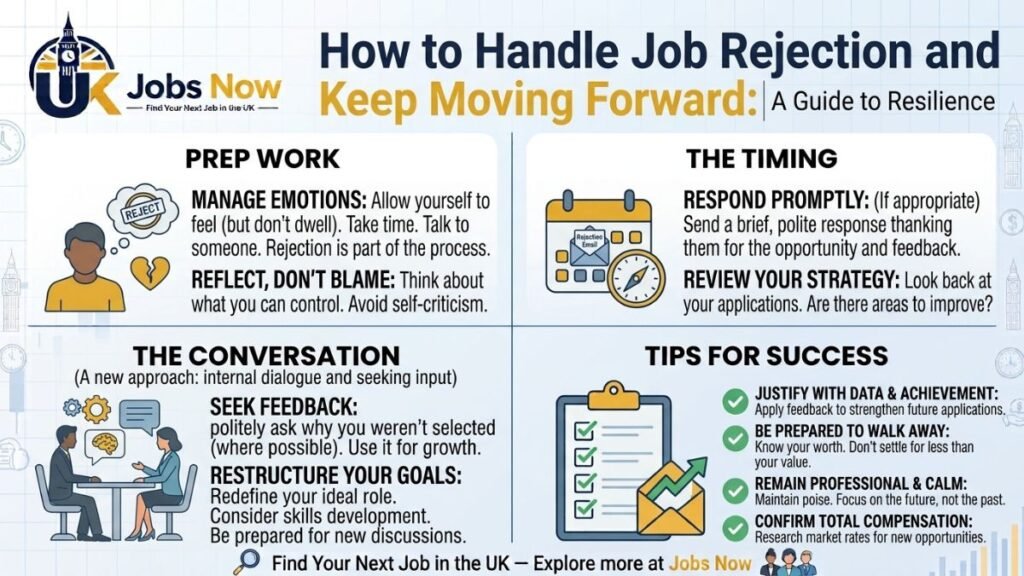
Give yourself a genuine, short window to feel it
Trying to immediately reframe a fresh rejection as “no big deal, onwards” often doesn’t actually work — it tends to just suppress the disappointment rather than process it, which can resurface later in less useful ways. A short, deliberate window — the rest of the day, or a single evening — to actually feel disappointed, without pushing straight back into job search mode, tends to work better than forcing immediate positivity.
Ask for feedback, and treat it as genuinely useful information
Not every employer provides feedback, and not every piece of feedback given is detailed or useful, but it’s worth asking politely regardless — even a brief, general comment can sometimes highlight something specific and fixable for your next application. A short message along these lines works well: “Thank you for letting me know, and for the opportunity to interview. If it’s possible, I’d really appreciate any feedback on my application or interview, as I’m keen to keep improving for future opportunities.” This lands as professional and genuinely curious rather than as pushing back on the decision.
Separate genuinely fixable issues from ordinary competitive variance
When feedback does arrive, it’s worth honestly distinguishing between something specifically actionable (a particular skill gap, a specific weaker interview answer) and simple competitive variance (a strong candidate pool where several people were qualified and only one could be chosen). Both are real, but only the first genuinely tells you something to change — the second is just a normal, unavoidable feature of a competitive hiring process, and treating it as a personal failing rather than a numbers game tends to do more harm than good.
How to keep momentum after a string of rejections
A run of rejections in close succession is genuinely one of the harder parts of an extended job search, and it’s worth having a specific, deliberate strategy for it rather than just pushing through on willpower alone.
- Keep a record of positive signals, not just outcomes. An interview invitation, positive feedback mid-process, or a recruiter’s encouraging comment are all genuine positive signals even when the final outcome is a rejection — it’s worth actively noting these rather than only registering the final “no,” since they’re real evidence your applications are working at least partially.
- Revisit your target list, not just your materials. If rejections are consistently coming from roles genuinely at the edge of your experience level, it may be worth including a broader mix of roles alongside your stretch applications, rather than only applying to the most competitive tier and experiencing rejection disproportionately as a result.
- Protect your routine and wellbeing deliberately. Job searching, particularly an extended one with repeated rejection, benefits from the same basic self-care principles as any other prolonged stressful period — maintaining some structure to your days, staying connected with people outside the search, and not letting job hunting consume every waking hour, even when it feels like it should.
When rejection points to something worth actually changing
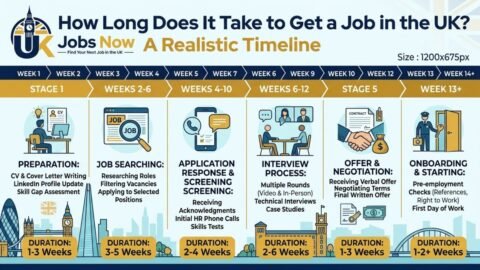
If a genuine pattern emerges — consistent feedback about the same specific issue, or a noticeable gap between interview invitations and final offers — that’s worth treating as real signal rather than dismissing. A pattern of getting interviews but not converting them often points to something fixable in interview performance specifically; a pattern of few interview invitations at all more often points to CV or targeting issues. Our guide on realistic UK job search timelines covers how to diagnose where in the process a search might genuinely be stalling, which is a more useful exercise than simply absorbing rejection after rejection without adjusting anything.
What not to do after a rejection
- Don’t respond defensively or argue with the decision. Even if you disagree, a gracious response keeps the relationship open for future opportunities with the same employer, which happens more often than people expect.
- Don’t assume one rejection reflects on your overall worth or ability. A hiring decision reflects fit for one specific role against one specific candidate pool at one specific moment — it’s a narrower judgement than it feels like from the inside.
- Don’t stop applying entirely while you process a difficult rejection. A short pause to genuinely process disappointment is reasonable; letting one rejection stall your entire search for weeks tends to compound the difficulty rather than resolve it.
A brief, professional way to respond to a rejection
“Thank you for letting me know, and for taking the time to consider my application. I really enjoyed learning more about the role and the team, and I’d be grateful for any feedback if you’re able to share it. I hope our paths cross again in future.” Short, gracious, and leaves the door open — exactly the tone worth aiming for even when you’re disappointed underneath it.
Staying in motion
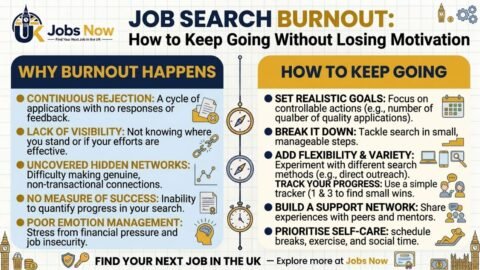
The most reliable way to keep rejection in perspective is genuinely staying active in your search rather than pausing entirely — a fresh application or an upcoming interview naturally shifts focus forward. You can browse current active UK job listings to keep your pipeline moving, and if job search fatigue itself, beyond any single rejection, is becoming the bigger issue, it’s worth a specific, honest look at that separately rather than assuming it will resolve on its own.
Frequently Asked Questions
Is it normal to feel genuinely upset after a job rejection?
Yes, particularly for a role you’d invested real effort and hope in — this is a proportionate, normal response, not something to feel you should simply brush off immediately.
Should I always ask for feedback after a rejection?
It’s generally worth asking politely, even though not every employer provides it or provides genuinely detailed feedback — when it does come, it can be genuinely useful information for future applications.
How many rejections is “normal” during a job search?
There’s no single normal number — it varies enormously by sector, role competitiveness, and market conditions. What matters more than counting rejections is whether your overall process (applications, interviews, feedback) is showing signs of progress or genuinely stalling at a specific stage.
Should I follow up again after a rejection to make my case?
Generally, no — a hiring decision that’s been communicated is typically final, and pushing back on it rarely changes the outcome and can leave a worse impression than a gracious, brief response. A polite request for feedback is different from arguing the decision itself.
How do I stay motivated after several rejections in a row?
Focus on tracking genuine positive signals (interview invitations, encouraging feedback) alongside final outcomes, maintain some structure and routine during your search, and revisit whether your target roles and application materials genuinely need adjusting, rather than assuming persistence alone will resolve a pattern that might have a fixable underlying cause.