
Logistics and Warehouse Jobs: Roles, Pay Structures and Progression
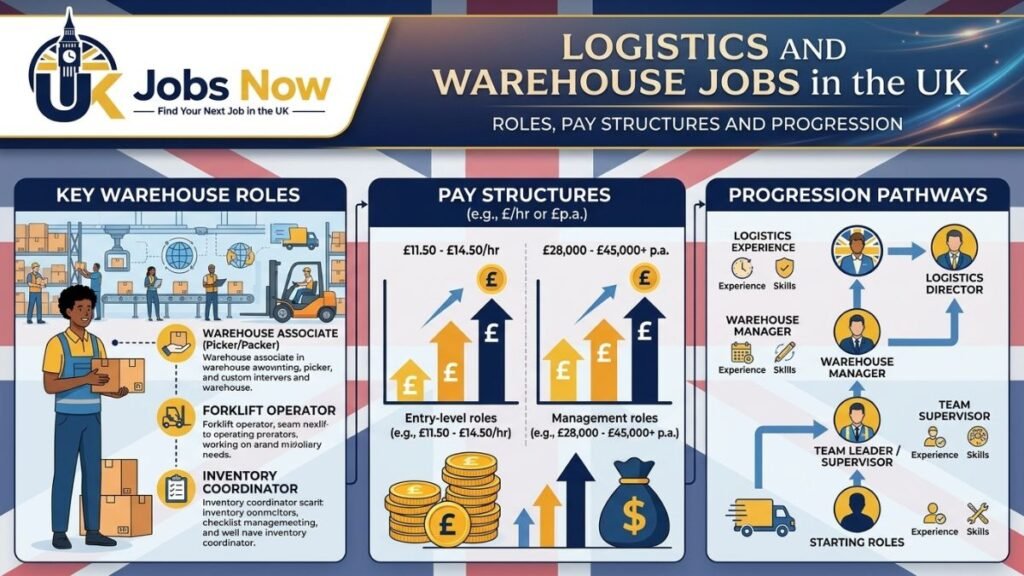
Online shopping habits changed permanently over the past decade, and the logistics and warehousing sector behind them grew to match — distribution centres, last-mile delivery operations, and the supply chain infrastructure connecting them now employ a genuinely large and growing UK workforce. It’s a sector that gets less attention in career advice than it deserves, given both the scale of opportunity and a progression path that’s often faster and more accessible than people assume.
The range of roles within logistics and warehousing
The sector covers considerably more than the warehouse floor picture most people default to. Core operational roles include warehouse operatives (picking, packing, goods-in and goods-out), forklift and machinery operators, and delivery drivers. Above and alongside these sit shift supervisors, warehouse and distribution centre managers, inventory and stock control specialists, transport planners coordinating delivery routes and schedules, and increasingly, roles focused on warehouse technology and automation as the sector modernises its operations.
Entry-level roles and what they typically require
Most entry-level warehouse operative roles have minimal formal requirements — reliability, physical capability for the specific role, and often willingness to work shift patterns that can include early mornings, evenings, or weekends, particularly around peak periods like the run-up to Christmas. Forklift and other machinery operation typically requires a specific licence or certification, but many employers offer this training on the job for genuinely promising candidates rather than requiring it as a prerequisite for entry — it’s worth asking directly during the application process whether training is provided rather than assuming you need to arrive already certified.
How pay and shift patterns actually work
Warehouse and logistics roles commonly involve shift-based pay structures, often with a premium for night shifts, weekend work, or overtime during peak periods — meaning your actual take-home pay can differ meaningfully from a simple hourly rate depending on which shifts you work. It’s worth understanding a specific role’s shift pattern and pay structure clearly during the application process, since this varies considerably between employers and even between different sites within the same company.
Progression within logistics
| Stage | Typical focus |
|---|---|
| Warehouse operative | Picking, packing, general warehouse operations |
| Machinery operator (forklift, etc.) | Specific equipment operation, often with employer-provided certification |
| Team leader/shift supervisor | Supervising a team or shift, coordinating daily operational targets |
| Warehouse/operations manager | Full site operational responsibility, staff management, performance targets |
| Regional/logistics network roles | Oversight across multiple sites, transport planning, supply chain coordination |
This progression path is genuinely well-trodden — many warehouse and distribution centre managers started as operatives, and larger logistics employers commonly run structured internal development programmes specifically designed to identify and progress capable operational staff into supervisory and management roles, similar in structure to the internal progression paths common in retail.
Technology’s growing role in the sector
Warehouse automation, inventory management systems, and route optimisation technology have become a significant and growing part of how logistics operations run, which has created a genuinely useful secondary path into the sector for people with relevant technical or data skills — warehouse management system administration, logistics data analysis, and automation and robotics maintenance roles are all growing areas that draw on skills somewhat different from traditional operational warehouse work, while still sitting within the broader logistics sector.
Physical demands and working conditions
It’s worth being direct: most operational warehouse and logistics roles are physically demanding — regular lifting, extended periods of standing or walking, and in some cases work in temperature-controlled environments (particularly cold storage for food logistics) that add an additional physical consideration. Understanding the specific physical demands of a particular role and site before accepting a position helps set realistic expectations, since this varies meaningfully between, for instance, a general goods warehouse and a cold storage food distribution centre.
Delivery driving as a specific path within the sector
Delivery driving — whether for a large logistics company, a specific retailer’s own delivery operation, or as a self-employed contractor for a delivery platform — represents a distinct entry point within the broader logistics sector, generally requiring a full driving licence and, for larger vehicles, additional specific licensing (an HGV licence for larger goods vehicles, obtainable through structured training that some employers will sponsor). This path offers a genuinely different day-to-day working pattern to warehouse-based roles, more independent and less team-based, which suits some people considerably better than site-based work.
Seasonal and peak-period opportunities
Logistics and warehousing see significant seasonal demand spikes, particularly around major shopping periods, and many employers hire substantial temporary or seasonal staff during these peaks. This can be a genuine entry point into the sector — performing well during a seasonal period sometimes leads to a permanent role offer, similar to the pattern seen in seasonal retail work, and it’s worth treating a seasonal logistics role as a real opportunity to demonstrate reliability and interest in the sector, not just a short-term stopgap.
Comparing logistics against other accessible sectors
If you’re weighing logistics against other sectors with accessible entry points and genuine progression — retail or hospitality, for instance — logistics tends to offer somewhat less direct customer interaction (a genuine advantage for some people, a downside for others who value that aspect of work), often stronger shift-pay premiums for less sociable hours, and a progression path that increasingly intersects with technology and data roles as the sector modernises, which isn’t as pronounced in retail or hospitality progression paths.
Getting started
Entry-level logistics roles are widely advertised and often hire on a rolling, relatively fast-moving basis, particularly ahead of seasonal peaks. You can browse current active UK job listings filtered by the logistics category to see current openings across warehouse, driving, and supervisory roles.
What a typical logistics interview covers
Interviews for operational logistics roles tend to be more practically focused than a typical office-based competency interview — expect questions about your reliability and attendance record, your comfort with physical demands and specific shift patterns, and any direct or transferable experience with relevant machinery or systems. For supervisory and management roles further up the progression path, expect a shift toward more standard competency-based questions covering team management, handling operational problems under pressure, and meeting performance targets — our guide to common UK interview questions is directly relevant preparation once you’re interviewing at this level.
Understanding employer scale and what it means for your experience
Logistics operations range enormously in scale, from a small local distribution operation to a vast, highly automated national distribution centre run by a major retailer or dedicated logistics company. Larger operations often offer more structured training and progression programmes, alongside greater exposure to warehouse technology and automation; smaller operations can sometimes offer faster, more informal progression and a broader, more varied day-to-day role. Neither is inherently better — it’s worth considering which environment genuinely suits your working style and career goals when comparing opportunities.
Safety training as a genuine, ongoing part of the job
Warehouse and logistics work involves genuine safety considerations — moving machinery, heavy goods, and often a fast-paced environment where attention matters. Most employers provide structured safety induction training before you begin working independently, and ongoing safety training is a standard, expected part of the role throughout your time in the sector, not a one-off box-ticking exercise. Taking this training seriously, and genuinely following safety procedures even under time pressure, is worth treating as a core professional responsibility rather than an inconvenience, both for your own safety and because a strong safety record is genuinely valued by employers when considering candidates for supervisory progression.
Frequently Asked Questions
Do I need a forklift licence to get a warehouse job?
Not always — many entry-level warehouse operative roles don’t require it, and some employers provide forklift or other machinery training on the job for promising candidates. It’s worth asking directly whether training is provided rather than assuming certification is a strict prerequisite.
How physically demanding is warehouse work?
Most operational roles involve regular lifting and extended periods of standing or walking, and some, particularly cold storage roles, involve additional environmental demands. It’s worth understanding a specific role’s physical requirements clearly before accepting a position.
Can I progress from a warehouse operative role into management?
Yes, this is a genuinely common and well-established path — many warehouse and distribution centre managers started as operatives, and larger logistics employers often run structured internal development programmes to support this progression.
Is delivery driving part of the logistics sector?
Yes — delivery driving, whether employed or self-employed, is a distinct but connected entry point within the broader logistics sector, generally requiring a driving licence and, for larger vehicles, additional specific licensing.
Are seasonal logistics jobs worth taking if I want a permanent role eventually?
Yes, often — performing well during a seasonal peak period sometimes leads to a permanent offer, and even where it doesn’t, it provides genuine, demonstrable experience and reliability worth including in future applications to the sector.
