Jobs With Visa Sponsorship in the UK: How It Works
Searches for “jobs with visa sponsorship UK” are among the most popular in the UK job market, and also among the most targeted by scammers. The rules have also become much stricter since July 2025, so a lot of older advice online is out of date. This guide explains how sponsorship works today, who can get it, how to find real sponsored jobs, and how to avoid being cheated.
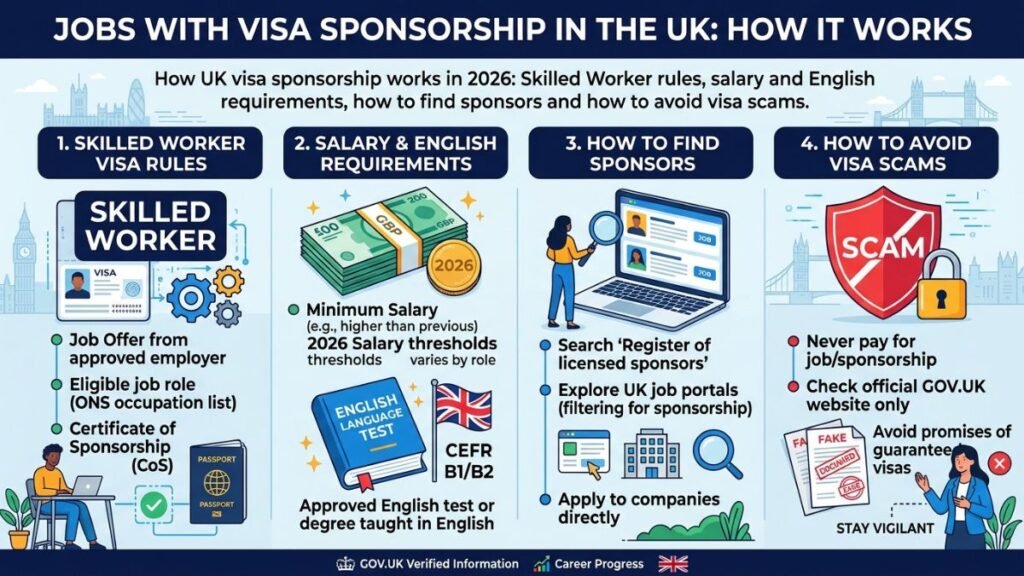
Quick answer: Most new Skilled Worker visas now require a job offer from a Home Office-licensed sponsor, a role at degree level (RQF Level 6), English at B2 level and a salary of at least £41,700 or the going rate for the job, whichever is higher. You never pay an employer for a sponsorship certificate.
This is general information, not immigration advice. Rules change often. Always check GOV.UK and, for your own case, speak to a regulated immigration adviser.
What does “visa sponsorship” mean?
Sponsorship means a UK employer holds a sponsor licence from the Home Office and has chosen to offer you a job and support your visa application. The employer assigns you a Certificate of Sponsorship (CoS), which is a reference number you use in your visa application. The employer, not you, pays for the sponsor licence and the Certificate of Sponsorship, and pays the Immigration Skills Charge where it applies.
Only employers on the Home Office’s licensed sponsor list can do this. Having a licence does not mean an employer is hiring from overseas, and sponsoring someone is entirely the employer’s choice.
The main sponsored route: the Skilled Worker visa
The Skilled Worker visa is the main route for sponsored jobs. It is based on points: 50 points are mandatory (a sponsored job offer, a job at the right skill level, and English language ability) and 20 more are tradeable, usually through salary.
The key rules in 2026
- Skill level: Since 22 July 2025, the job must be at RQF Level 6 (degree level) or above. The government raised this from RQF Level 3, which removed more than 100 occupation codes from standard sponsorship. The level depends on the job’s occupation code, not your own qualifications.
- Salary: The general minimum is £41,700 a year, or the going rate for the occupation, whichever is higher. Reduced thresholds apply in some cases, such as certain new entrants and some specific roles.
- English: From 8 January 2026, new applicants need English at CEFR level B2 (upper intermediate), up from B1.
- A genuine sponsor and job: The employer must hold a valid licence, and the job must be real and match the occupation code.
What changed in July 2025
The July 2025 reforms ended sponsorship for many mid-skilled jobs. A limited, time-limited exception exists through the Temporary Shortage List for certain roles below degree level. These roles do not get the salary discounts of the old shortage list, and workers sponsored on them cannot bring dependants. The list and the older Immigration Salary List are due to expire on 31 December 2026 unless the government extends or replaces them, so check the latest position.
Care work
Since 22 July 2025, overseas applicants can no longer apply for Health and Care Worker visas for jobs in adult social care, such as home care and residential care worker roles. People already in the UK in those roles can continue under transitional rules. Be extremely careful of any advert or agent offering care worker visas from outside the UK, because it is not currently possible and is a common scam.
Which jobs can be sponsored?
As a guide, jobs that are more likely to qualify are those that normally need a degree or equivalent skill, for example:
- Doctors, nurses and some other health professionals (often through the Health and Care Worker visa)
- Software engineers, data scientists and IT specialists
- Engineers and scientists
- Accountants and financial analysts
- Teachers in some subjects and settings
- Architects, pharmacists and other regulated professionals
Jobs that usually no longer qualify include most hospitality, retail, warehouse, cleaning, driving, general admin and entry-level roles. Whether a particular role qualifies depends on its occupation code, salary and the employer, so always check with the employer and against the official occupation lists on GOV.UK.
You can browse current vacancies on our UK jobs board, but note that a job being listed does not mean the employer sponsors visas. Look for a clear statement such as “sponsorship available” in the advert, or ask the employer before applying. Many adverts, including those for large retailers, say you must already have the right to work in the UK.
Other routes to work in the UK
Not every route needs a job offer or a standard sponsor.
- Health and Care Worker visa: For qualified health professionals such as doctors and nurses, with employer sponsorship. It is closed to overseas adult social care workers.
- Global Talent visa: For leaders or potential leaders in fields such as science, engineering, digital technology, arts and culture. It is endorsed by a recognised body and does not need a job offer.
- High Potential Individual visa: For recent graduates of eligible top global universities, with no job offer needed.
- Scale-up visa: For people with a job offer from a qualifying fast-growing UK business.
- Graduate visa: For international students who have completed a UK degree. The government has said the length of permission will fall from two years to 18 months for new applicants from 1 January 2027, so check the current position.
- Global Business Mobility routes: For people transferred to the UK by their overseas employer.
- Seasonal Worker visa: For short-term horticulture work through approved scheme operators.
Check the rules for each route on GOV.UK, since they change and have separate eligibility, fees and time limits.
How to find genuine jobs with visa sponsorship
- Start with the official register. GOV.UK publishes the register of licensed sponsors for workers. You can search by employer name, and it shows which routes the employer is licensed for. It is free.
- Match your skills to sponsor-friendly sectors. Healthcare, technology, engineering, finance, science and universities are the most likely to sponsor.
- Search employer careers pages. Many large employers say on their careers pages whether they sponsor. Apply directly and mention your right-to-work status honestly.
- Use trusted job boards. Use the filters and read the advert carefully. A role marked “visa sponsorship” should still be checked against the register.
- Tailor your CV for UK employers. See our guide to writing a UK CV.
- Ask the question early, politely. In your application or at interview, ask whether the employer holds a sponsor licence and whether the role is eligible.
The step-by-step process
- Check eligibility. Confirm the job’s occupation code, salary and skill level meet the rules, and that you can show B2 English.
- Get a job offer from a licensed sponsor.
- Employer assigns your Certificate of Sponsorship. They give you the CoS reference number, which should match your job details.
- Apply for the visa online within the time limit that applies to your CoS. Check the current deadline on GOV.UK.
- Provide your documents and English evidence, pay the visa and healthcare charges, and attend your biometrics appointment.
- Wait for a decision. Processing times vary, so check GOV.UK for the current standard times.
- Travel and start work once your visa is granted, within the dates shown on it.
Fees, the Immigration Health Surcharge and processing times change regularly. Use the official GOV.UK fee and processing-time pages for current figures, not a third-party website.
Settlement and long-term plans
The government has said it intends to lengthen the standard qualifying period for indefinite leave to remain (settlement) from five to ten years for most people, with some ways to shorten it based on contribution. As of mid-2026, commentators reported that the main earned settlement changes had not yet been brought into force, though ministers have said they plan to proceed. Check the latest position before you plan around a five-year timeline. A separate change will raise the English requirement for settlement to B2 from March 2027.
Visa sponsorship scams: how to protect yourself
Sponsored jobs are a favourite for criminals, because applicants are often far away and under pressure. Watch for these red flags:
- Anyone asks you to pay for sponsorship, a Certificate of Sponsorship or a “guaranteed job”. Employers pay for these, and selling them is illegal.
- A job offer without a proper interview or any contact with the real company.
- The employer is not on the licensed sponsor register, or the name differs slightly from the real company.
- Offers of care worker visas from overseas, which are closed to new overseas applicants.
- WhatsApp or Telegram only contact, free email addresses, or a fake website that copies a real company.
- Requests for your passport or bank details early, or fees for “processing” or “verification”.
- Pressure and guarantees, such as “100% visa approval” or “limited places”. No one can guarantee a visa.
Verify every offer by contacting the employer through the phone number or email on its official website, and check the licensed sponsor register. Read our full guide to how to spot a fake job advert in the UK and what to do if you have been targeted. If you need immigration advice, use a regulated adviser, such as one authorised by the Office of the Immigration Services Commissioner (OISC) or a solicitor, and check their registration.
Frequently asked questions
Can I get a UK visa sponsorship job with no experience? It is difficult. The job must be at degree level and meet the salary threshold, so most sponsored roles want qualifications or experience. Some graduate or new-entrant roles may qualify.
How much salary do I need for a Skilled Worker visa? The general minimum is £41,700 a year, or the going rate for the job if higher. Lower rates apply in some cases, so check the rules for your occupation.
Do I have to pay my employer for a visa sponsorship? No. The employer pays for the sponsor licence and the Certificate of Sponsorship. Anyone selling sponsorship is breaking the rules.
Can I apply for a care worker visa from abroad? No. Since 22 July 2025, new overseas applications for adult social care roles are closed.
What English level do I need? New Skilled Worker applicants need B2 English from 8 January 2026.
How do I check if a company can sponsor workers? Search for it on the GOV.UK register of licensed sponsors for workers.
Will the rules change again? Probably. The shortage lists are due to expire at the end of 2026 and settlement reforms are planned, so check the official rules before you apply.
Final thoughts
UK visa sponsorship is still possible, but it is now mainly for skilled, degree-level jobs with higher salaries. The safest approach is to check the official sponsor register, apply directly to employers, never pay for a job or a certificate, and verify every offer. When you are ready to search, browse the latest roles on our jobs board and always confirm the sponsorship position with the employer.
This article is general information, not legal or immigration advice. Immigration rules change frequently. Check GOV.UK for the latest rules and consult a regulated immigration adviser about your own situation.